A Soulsborne Newcomer's Journey Through Elden Ring in Seamless Co-op
Elden Ring and Seamless Co-op mod offer a thrilling, transformative multiplayer journey, turning daunting challenge into exhilarating adventure.
For years, the Soulsborne genre remained an intimidating, impenetrable fortress for many gamers, characterized by punishing difficulty, obscure lore, and a steep learning curve. The author, a self-proclaimed holdout, had long observed from the sidelines, watching speedruns and absorbing cultural osmosis without ever taking the plunge. The prospect of clunky combat and relentless defeat seemed unappealing, a barrier too high to scale. That all changed with a simple, revolutionary proposal: to experience Elden Ring not as a solitary, masochistic pilgrimage, but as a shared adventure using the transformative Seamless Co-op mod. This wasn't about seeking an easy way out, but about finding a different door in—one that promised guidance, camaraderie, and a safety net that could turn daunting challenge into exhilarating discovery.
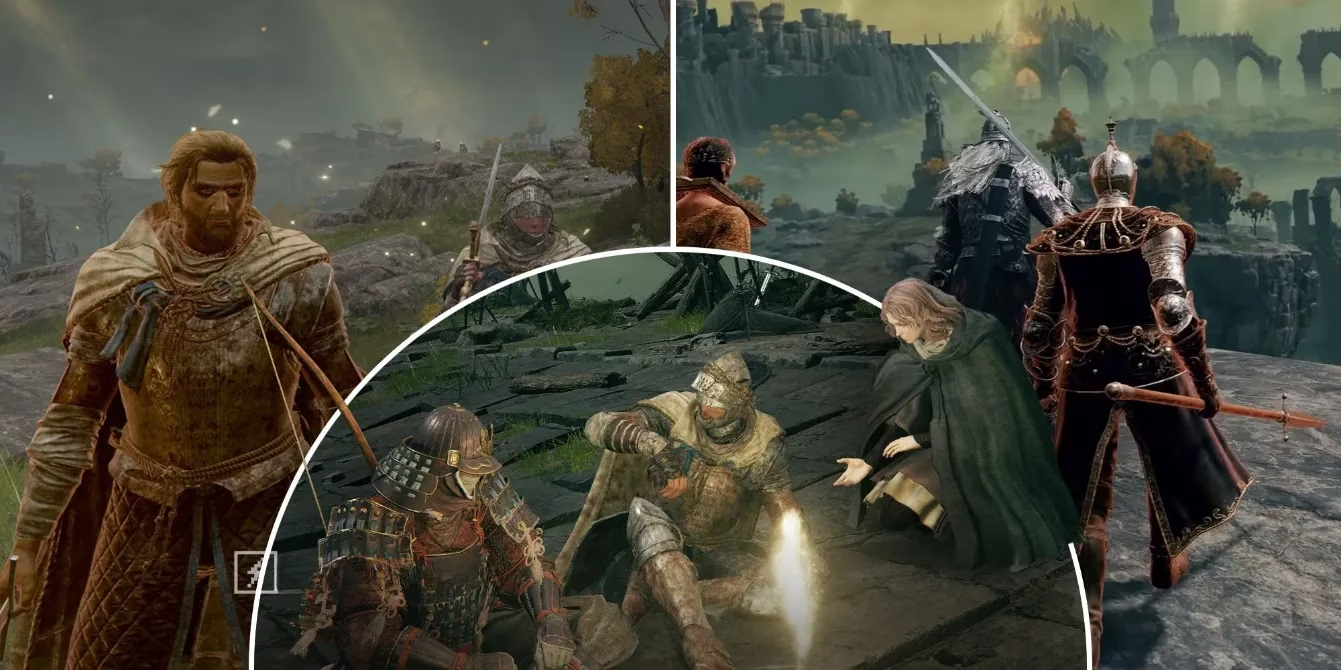
The journey began, as all do in The Lands Between, with character creation. Faced with a sea of cryptic stats, the newcomer's choice was guided by pure survival instinct: the Astrologer class was selected, prioritizing magic and distance over the intricate dance of melee combat. It was a pragmatic, if apprehensive, first step into a vast unknown. Loading into the world, the technical prowess of the Seamless Co-op mod became immediately apparent. The experience was smooth, stable, and deeply integrated, prompting a natural question: why doesn't FromSoftware officially support such a robust, persistent multiplayer campaign? The mod didn't just enable co-op; it redefined the social fabric of the game, allowing two players to truly inhabit the same world from start to finish.
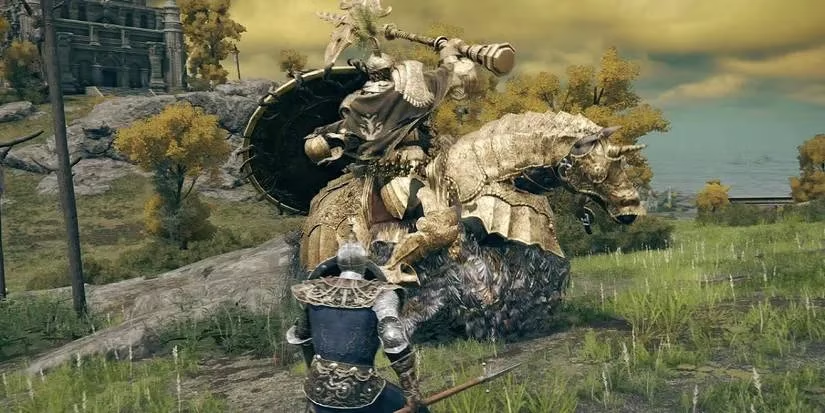
Emerging into the golden light of Limgrave, the scale of the world was instantly overwhelming. And there, almost tauntingly, stood the first true test: the Tree Sentinel. A magnificent, armored colossus astride a steed. An agreement with the veteran co-op partner was in place—no unsolicited guidance, no spoiling of consequences. With a mix of defiance and foolish courage, the newcomer approached. The iconic boss health bar, a symbol seen in countless streams and memes, flashed onto the screen. A few defiant spells later, the result was as predictable as it was swift: a swift, humbling return to the Site of Grace. This first, glorious failure was a rite of passage, perfectly encapsulating the Soulsborne ethos, yet softened by the presence of a laughing companion ready to try again.
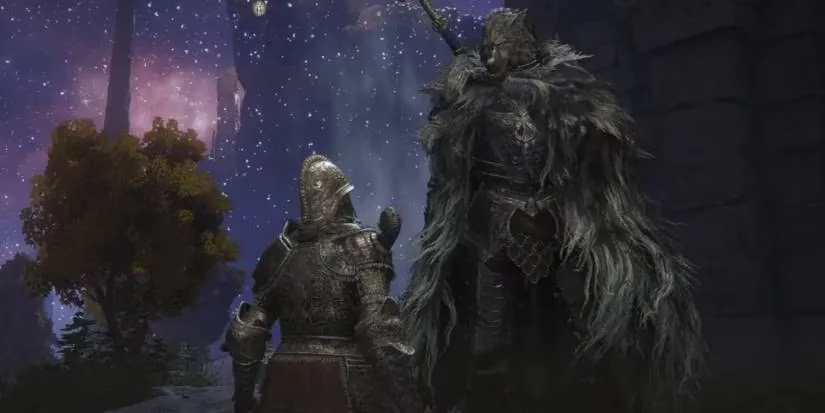
Exploration took a surreal turn upon discovering a mysterious well in the Mistwood. One descent later, the duo found themselves in Siofra River, a breathtaking, star-lit underground realm that felt like an entire second game layered beneath the first. The enemies here were formidable, their attacks punishing. Giant, spectral creatures roamed the banks. It was here that the game's immense, layered world design truly revealed itself. Stumbling upon the Ancestor Spirit boss, only to be soundly defeated, was less a frustration and more a moment of awe. The realization dawned: Elden Ring's world was not just large, but deep, vertically and metaphorically, encouraging a sense of wonderous, terrifying discovery.
Combat adaptation for a ranged magic user was a process of trial, error, and strategic reliance. Dodge-rolling remained a perilous art, but playing as an Astrologer allowed for a support role: the veteran friend would draw aggro, creating openings for spell flurries. This synergy worked beautifully against standard foes, but bosses presented a chaotic challenge. Their tendency to rapidly switch targets meant a single mistimed dodge could spell instant doom. Yet, the co-op dynamic fundamentally altered these encounters. Facing the notorious Margit the Fell Omen, the duo assembled a small army, summoning Sorcerer Rogier and Spirit Jellyfish to aid them. The fearsome boss, a wall for many solo players, fell to coordinated tactics and shared aggression. Early bosses like Godrick the Grafted and the Leonine Misbegotten fell to similar strategies, though unexpected challenges like the Ulcerated Tree Spirit provided a brutal reminder of the game's inherent difficulty.
The emotional core of the co-op experience wasn't just in overcoming bosses, but in the shared journey itself. The dynamic between the reckless, curious newcomer and the cautious, knowledgeable veteran created a constant, entertaining push-and-pull. The veteran's patience was regularly tested by impulsive charges into unknown danger, while the newcomer's terrified screams upon ambush by some new cosmic horror provided endless amusement through the headset. This social layer transformed the experience from a solitary test of skill into a collaborative, memorable adventure. The joy of discovery was doubled, and the sting of defeat was halved.
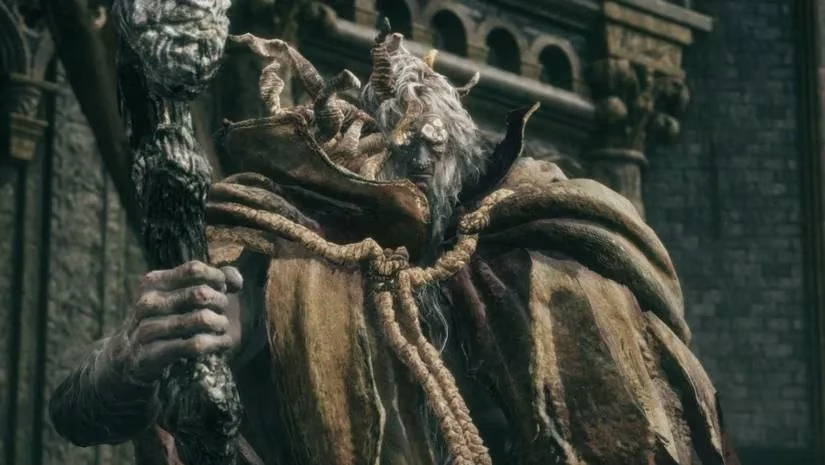
Even the famously opaque lore began to seep in. While the storytelling—through sparse dialogue and environmental clues—was initially alien, the grand narrative beats were compelling. Learning that the legendary Malenia had crushed Godrick, or understanding Godrick's diluted lineage from the First Elden Lord, provided tantalizing hooks. Interactions with characters like the forlorn Blaidd, though brief, felt weighty and mysterious. The newcomer began to appreciate the unique charm of piecing together a narrative from fragments, a stark contrast to more exposition-heavy RPGs. It fostered a sense of personal investment and curiosity about the shattered world.
Ten hours in, the transformation was palpable. What began as an intimidating foray had become an invested journey. The Seamless Co-op mod had not simply made the game easier; it had made it accessible in the truest sense. It provided a framework for learning, sharing, and enjoying the immense world of Elden Ring without sacrificing its core identity. The victories, while perhaps less individually hard-won, were richly collaborative. The exploration was filled with shared wonder and panic. For this particular newcomer, it proved to be the only viable gateway into a genre that had long seemed closed off. The future may not hold a solo run through the classic Dark Souls trilogy, but the road ahead in The Lands Between, walked side-by-side with a friend, is bright, perilous, and eagerly anticipated.
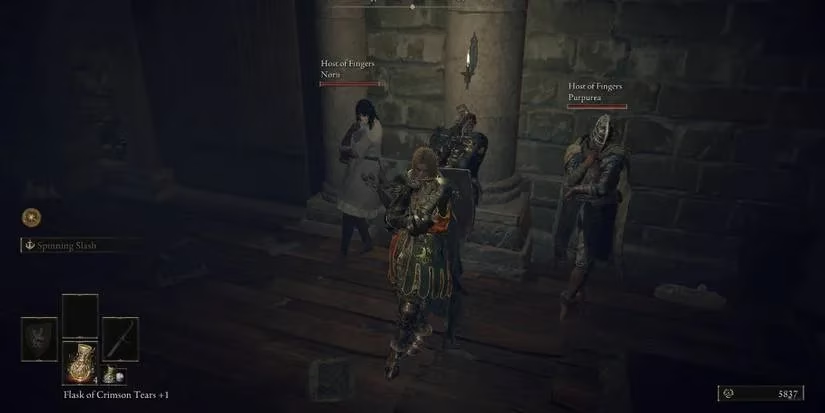
This experience highlights a significant evolution in how players engage with challenging games in 2026. Community-created tools like the Seamless Co-op mod demonstrate a desire for flexible, social experiences within hardcore frameworks. It underscores that the "intended" solo experience, while valid and cherished by many, is not the only path to appreciation. For some, the shared struggle, the inside jokes born from repeated failures, and the collective triumph over a daunting foe create memories and investment that a purely solitary challenge cannot. Elden Ring's open-world design, with its freedom of direction and progression, is uniquely suited to this cooperative reinterpretation, allowing two players to craft their own parallel legend within the same epic tale.
Expert commentary is drawn from Polygon, and it helps frame why Seamless Co-op can feel like a “different door in” to Elden Ring: by turning repeated deaths, opaque quests, and intimidating bosses into shared stories, players trade solitary endurance for collaborative problem-solving without erasing the game’s tension. In practice, that social layer reinforces the blog’s arc—from bouncing off the Tree Sentinel to finding confidence through coordinated tactics—by making experimentation, exploration, and even failure feel like forward progress rather than punishment.