Elden Ring Nightreign's Silent Co-op Experience: A Refreshing Departure from Modern Multiplayer Norms
Elden Ring Nightreign delivers a refreshingly unique co-op experience with its limited voice chat and strict party sizes, forging deep, unspoken camaraderie.
In a gaming landscape saturated with seamless voice chat, meticulously balanced party sizes, and constant communication, the recent network test for Elden Ring Nightreign offered a surprisingly refreshing, albeit intentionally limited, co-operative experience. While the final version promises more robust social features, the test's constraints—namely the absence of direct voice chat and a strict three-player squad requirement—unintentionally highlighted a unique and compelling form of multiplayer camaraderie. This design choice, reminiscent of FromSoftware's traditionally subtle approach to online interaction, fostered an environment where silent understanding and shared discovery took precedence over vocal coordination, creating memorable moments that many players rushing for full communication tools might never experience.
The Inherent Learning Curve of Silent Cooperation
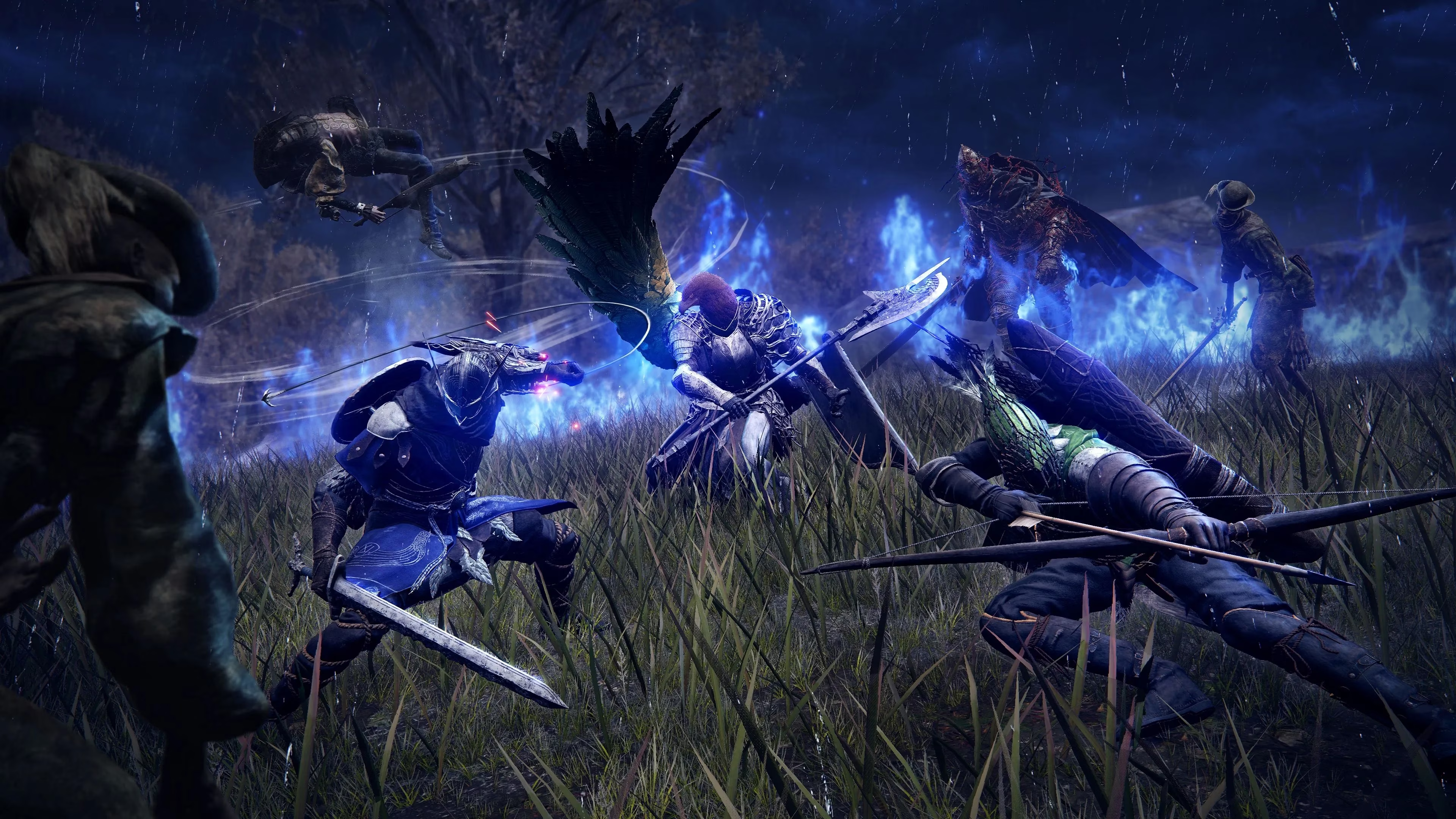
Without the crutch of voice communication, players in the Nightreign network test were forced to rely on observation, context, and implicit teamwork. The initial moments of a session, especially when paired with random companions, were often characterized by tentative exploration and a shared, unspoken newness. Players weren't shouting strategies; they were watching each other's movements, learning attack patterns together, and discovering the game's mechanics—such as navigating the perilous, shrinking nighttime circles—through trial and shared error.

This organic, non-verbal learning process stands in stark contrast to the instant knowledge transfer typical of voice-chat-enabled gaming. There's a distinct pleasure in collectively deciphering a game's rules, a process that is often shortcut or entirely bypassed when a more experienced friend verbally guides every step. In Nightreign, success wasn't dictated by a perfect callout wheel or complex verbal plans; it was built on the foundational, almost instinctual ability to support one another when a cry for help was literally impossible.
Forging Unspoken Bonds in the Heart of Limveld
The atmosphere of Elden Ring Nightreign's world, Limveld, is one of pervasive dread and mystery, much like its predecessor's Limgrave. This setting is profoundly enhanced by the silent co-op dynamic. The experience transforms from a potentially chatty playground into a tense, shared journey where every gesture carries weight. A timely revive during a chaotic boss fight against an adversary like the Duchess isn't just a mechanical action; it becomes a profound act of unsolicited aid, fostering a deep, wordless sense of camaraderie.
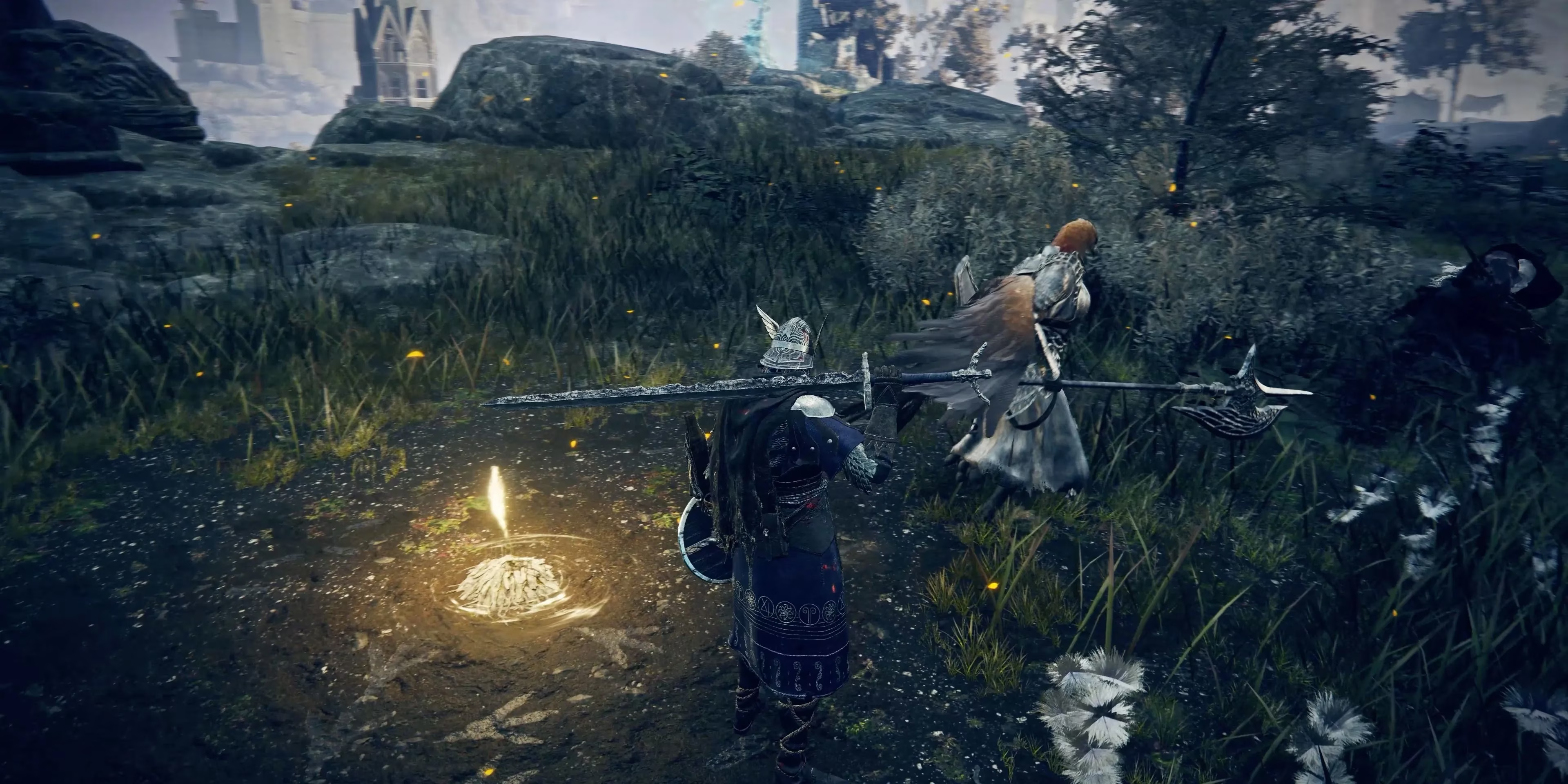
This silent partnership creates a special kind of digital friendship. Players are united not by conversation, but by shared purpose and mutual, unspoken trust. The gratitude felt when a stranger risks their own safety to resurrect you carries a different, often more potent, emotional resonance than the same action performed by a friend on a voice call. It's a pure form of cooperative gameplay, stripped of social distraction and focused entirely on the shared objective of survival.
A Delicate Balance: Social Gaming vs. Immersive Challenge
It's important to note that Nightreign's full release is positioned as a more accessible, socially-flexible experience compared to the austere single-player journey of the base Elden Ring. Its faster pace and potentially less punishing difficulty curve mean it will comfortably accommodate players who wish to treat it as a social backdrop, a game to enjoy with friends while chatting about other topics. The title occupies a fascinating middle ground between methodical Soulslike exploration and the frenetic, team-based action of popular multiplayer genres.

However, this very flexibility makes the unique, silent co-op experience of the network test a potentially fleeting treasure. Once voice chat is standard and player knowledge becomes widespread, the magic of that initial, collective discovery will inevitably fade. The clamor for duo queues and perfect communication, while understandable, risks overshadowing the unique atmospheric and interpersonal dynamics that a more restrained system can accidentally cultivate.
The Lasting Impact of a Constrained Test
For many participants, the network test served as a valuable reminder that not all multiplayer experiences need to prioritize maximum communication efficiency. There is a distinct, almost nostalgic appeal to figuring things out alongside strangers, where teamwork is demonstrated through action rather than words. While the reviewer plans to enjoy Nightreign with friends upon its full release, they also express a clear intention to occasionally seek out that silent, random queue experience—a testament to its unique appeal.
The curated glimpse provided by the test was a deliberate design choice by FromSoftware, one that allowed a core, atmospheric element of their design philosophy to shine through before the inevitable wave of social features arrives. It highlighted that in an era of hyper-connected gaming, there remains a special, if niche, value in mystery, implicit understanding, and the powerful bonds forged in silence against a common, formidable foe.
| Aspect | Network Test Experience | Typical Modern Co-op Game |
|---|---|---|
| Communication | Non-verbal, implicit cues | Voice chat, text chat, ping systems |
| Learning Pace | Organic, shared discovery | Often guided or accelerated by veteran players |
| Social Dynamic | Bond formed through shared action | Bond often pre-existing or built through conversation |
| Atmospheric Impact | Enhances mystery and tension | Can dilute immersion with out-of-context chatter |
| Player Reliance | High on observation and context | High on verbal coordination and callouts |
In conclusion, Elden Ring Nightreign's network test, by virtue of its limitations, accidentally delivered a masterclass in atmospheric multiplayer design. It proved that camaraderie can be built in silence and that challenge can be more meaningful when overcome through mutual, unspoken understanding. As the gaming community eagerly awaits the full suite of social tools, the memory of those quiet, cooperative triumphs in the dark of Limveld will likely linger as a poignant reminder of a uniquely FromSoftware take on playing together.