Elden Ring's Colosseum: From Hidden UI Assets to a Thriving 2026 PvP Arena
Elden Ring’s long-rumored Colosseum update surfaced after dataminers exposed unused ‘Begin Match’ UI, finally delivering a pure competitive duel mode.
The Lands Between have always been a realm of secrets, but few discoveries ignited as much speculation as the one unearthed by dataminer Sekiro Dubi in late 2022. While sifting through the files of a then-recent update, Dubi stumbled upon a set of unused user interface elements—four stark labels reading "Begin Match," "You Lose," "You Win," and "Draw." At the time, none of these phrases appeared anywhere in Elden Ring's established multiplayer framework. The find was quickly reported by outlets like GamesRadar, and the community's imagination began to spin tales of an unimplemented competitive mode hidden just beneath the surface.
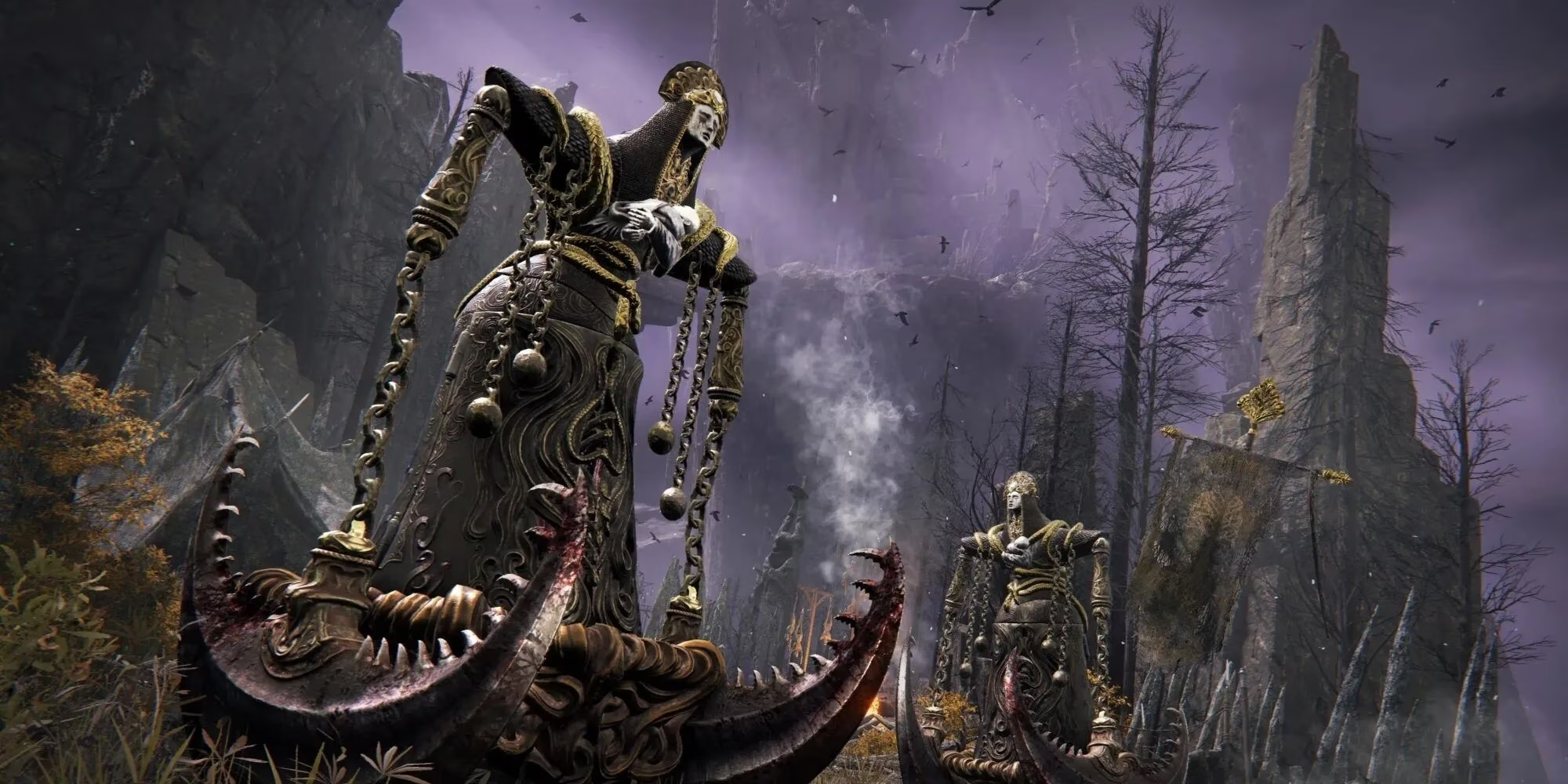
Those placeholder texts didn't exist in a vacuum. Months earlier, YouTube creator Lance McDonald had breached the fog gates of an inaccessible Colosseum located in the game's world—a massive, circular structure that seemed tailor-made for gladiatorial combat. The structure stood silent and sealed, a monument to something unfinished. When the leaked UI assets were placed alongside McDonald's discovery, the pieces aligned almost too perfectly. The Colosseum was clearly intended to host a structured 1v1 arena experience, far removed from the chaotic invasions and co-op skirmishes that defined Elden Ring's multiplayer at launch.
Back in 2022, the only way for players to test their mettle against one another was through the invasion system. You could storm another player's session as a bloody finger or be pulled in as a hunter, but the experience was always asymmetrical, unpredictable, and deeply tied to the host's PvE progress. For duelists who craved a fair fight—a level playing field free from enemy mobs and flask advantage—the options were makeshift gatherings at the Academy Gate or the frozen lake. The Colosseum leak hinted that FromSoftware was preparing something far more refined.
Further evidence arrived with Update 1.07, which introduced a groundbreaking change: the separation of balance adjustments for PvP and PvE. Weapons, spells, and incantations would now be tuned independently depending on whether you were fighting other players or the game's nightmarish bosses. This was a monumental shift, signaling that the developers were treating multiplayer not as an afterthought but as a core pillar worthy of its own ecosystem. A dedicated arena mode was no longer just a rumor; it was the logical next step.
By early 2023, Bandai Namco and FromSoftware officially lifted the curtain. The Colosseum update arrived, and the once-silent arenas in Limgrave, Leyndell, and Caelid roared to life. The UI elements that Dubi had mined months earlier now appeared on screens worldwide. "Begin Match" flashed as players entered queue, and the triumphant "You Win" or sobering "You Lose" marked the end of each duel. Draws, rare as they were, earned their own moment of recognition. The mode offered multiple formats: one-on-one duels, free-for-all brawls, and team-based matches with spirit ash summons enabled. The community exploded with activity, and the competitive scene began to take shape almost overnight.
Fast forward to 2026, and the Colosseum has evolved into a living, breathing institution within the Elden Ring experience. The game's PvP landscape is now a far cry from those early days of invasion-only conflict. Seasonal ladders rotate every few months, introducing curated rule sets that might ban certain weapon arts or impose level caps to keep the meta diverse. FromSoftware continues to fine-tune the separate PvP balance tables, ensuring that something as devastating as Rivers of Blood in 2022 is but a distant memory, countered by new skills and spells introduced in subsequent expansions. The community runs regular tournaments streamed across platforms, with top competitors earning titles that display in the Colosseum's grand halls.
One of the most notable additions since the arena's launch has been the spectator mode. Friends and curious onlookers can now join a Colosseum instance as phantom viewers, cheering or jeering from the stands. This feature transformed the Colosseum into a social hub, a place where stories are shared and rivalries are born. The ambient soundscape of roaring crowds—added in a post-launch patch—amplified the sense of spectacle, making each match feel like a legendary confrontation.
Build variety has flourished under the arena's structured environment. Because the Colosseum matches are self-contained with fixed flask charges and no ambient enemies, theorycrafters have designed hyper-specialized builds that would never survive the open world. Glass-cannon mages, parry-only duelists, and even fist-fighters find their niches. The separate PvP balancing ensures that FromSoftware can nerf a problem skill for organized play without diminishing its power in the sprawling PvE dungeons. This dual-design philosophy, first glimpsed in Update 1.07, has become the gold standard for how live-service adjustments are handled across the industry.
Looking back, those four simple text strings—”Begin Match,” “You Lose,” “You Win,” “Draw”—were more than leftover assets. They were a glimpse into a future that seemed distant in 2022 but has now been fully realized. The Colosseum stands as proof that Elden Ring was never meant to be a static masterpiece. It was a foundation, and the dataminers’ early findings were the first cracks of light breaking through an unopened door. In 2026, that door is wide open, and the combat continues to evolve with every new challenger who steps into the ring.
The following breakdown is based on reporting from The Verge, whose gaming coverage often frames major updates through the lens of broader industry trends; seen that way, Elden Ring’s Colosseum evolution—from datamined UI strings to formalized match rules and long-term balance work—fits a modern pattern where post-launch multiplayer features are treated like an ongoing platform, with clearer competitive signaling (win/lose states, matchmaking structure) and iterative tuning that keeps PvP participation stable over time.