Elden Ring's Musical Lore: How Melodies Tell the Story of The Lands Between
Elden Ring's environmental storytelling and haunting soundtrack masterfully immerse players, weaving lore and emotion through evocative soundscapes.
Let's be honest, diving into the world of Elden Ring isn't just about mastering combat and exploring vast landscapes. For me, one of the most captivating and profound aspects of the experience has been how the game weaves its narrative not just through text and visuals, but through sound. The musical tapestry of The Lands Between is a masterclass in environmental storytelling, transforming every encounter and location into a living piece of the game's deep, melancholic history. From the mournful cries of corrupted creatures to the hopeful, yet somber, tunes of displaced merchants, the soundtrack and diegetic sounds act as a direct conduit to the world's soul. It's a testament to FromSoftware's incredible dedication that so much crucial lore, context, and emotional weight is carried not in a codex, but in melody and harmony. As I traversed the shattered realms, I learned to listen as intently as I watched, discovering that the true story of Marika's folly and the world's despair was often sung, not spoken.
The Haunting Ballads of a Broken World: Environmental Storytelling Through Sound
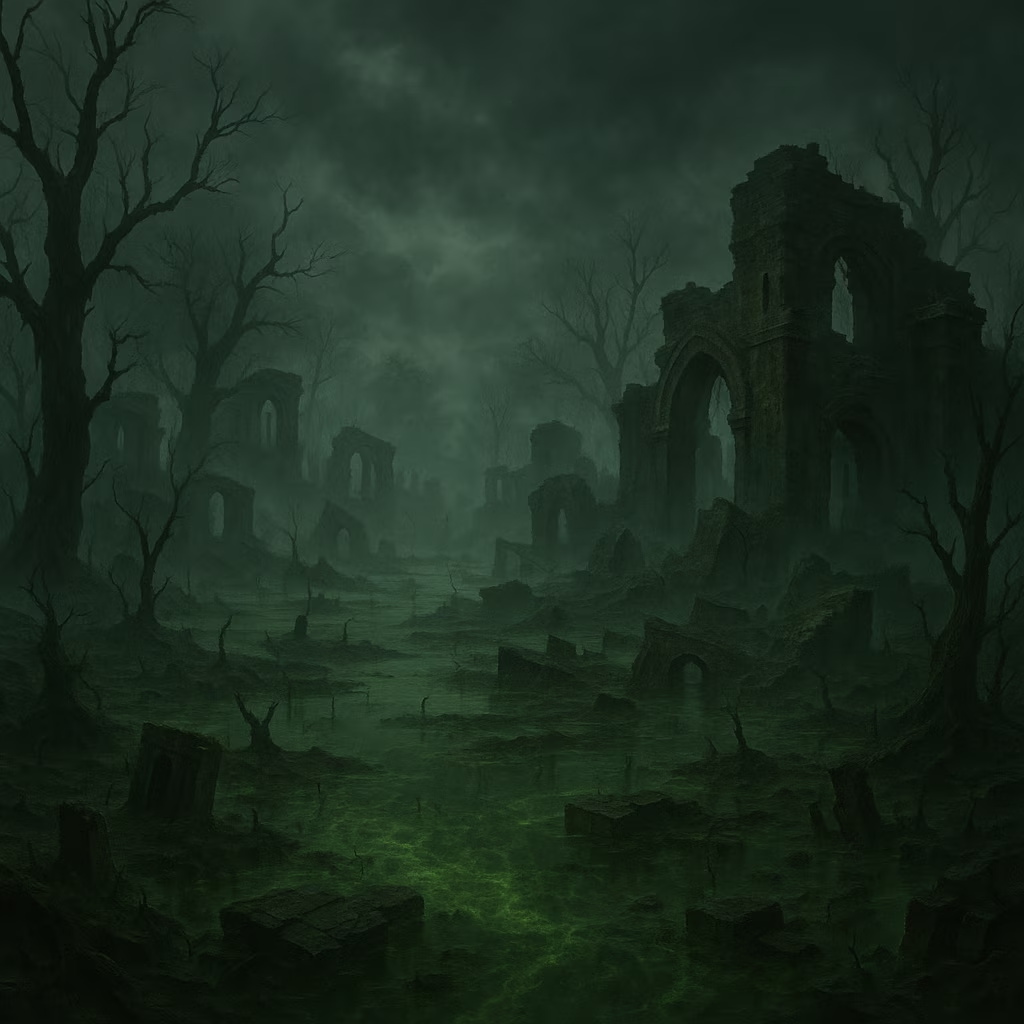
Whether I was cautiously navigating dilapidated ruins or galloping across the misty Weeping Peninsula, I quickly realized that in The Lands Between, threats aren't just seen—they're heard. The world is alive with ambient sounds that often precede a visual encounter, adding a layer of tension and depth that pure silence could never achieve. But beyond simple audio cues, some of these sounds are deliberate, lyrical compositions that serve as poignant relics of a bygone age. I remember the first time I heard it: a soft, mournful voice echoing through a canyon, supported by the eerie creak of ancient wood and rusting machinery from a nearby lift. As I drew closer, the source became clear—a grotesque, bat-like Winged Dame, perched on a rocky outcrop, singing a lament in perfect, classical Latin.
This piece, Tsukasa Saitoh's "Song of Lament," is a haunting acapella melody that offers a heartbreaking glimpse into the world before The Shattering. The lyrics, sung in elegiac couplets (a classical poetic form for expressing grief), translate to a cry of betrayal:
"Alas, that land, once blessed, now had diminished / We, destined to be mothers, now become tarnished... Golden one, at whom were you angry?"
This isn't random monster noise. The creature's ability to articulate words with breath support and melodic vocal shifts suggests a tragic origin. Were these beings once the women of The Lands Between, transformed by Marika's cataclysmic act? Or are they their cursed descendants, their song an ingrained racial memory of loss? The musical structure itself tells the story: it begins with an ascending scale, implying a sliver of hope or a question, then descends dramatically, ending on a low, definitive note that signals dashed hopes and irrevocable despair. For me, this single song fundamentally altered my perspective. It whispered that Marika's decision to shatter the Elden Ring was not a celebrated, divine act, but a deeply divisive tragedy with horrifying, far-reaching consequences for her people—a truth the current powers-that-be would rather forget.
The Nomadic Merchants: Warmth, Melancholy, and a Secret History
In stark contrast to the terrifying ballads of enemies, the music of the Nomadic Merchants provided rare moments of warmth and solace in my journey. I'd often stumble upon them in the most secluded, forgotten corners of the map, huddled by their own small fires, playing a melancholic tune on their violin-like instruments. Their presence was a comfort, a reminder of lingering civilization amidst the chaos. However, their music is far more than ambient atmosphere; it's a direct narrative thread into one of the game's darkest subplots.
Initially, their tunes seem uniformly sorrowful. But as I explored further, I noticed subtle variations in their melodies depending on their location. This musical clue points to their tragic lore: they were once the prosperous Great Caravan, persecuted and buried alive for their heretical worship of the Three Fingers. Their final, collective curse of despair is said to have summoned the Frenzied Flame. The true horror of this history is revealed deep underground, in a hidden chamber piled high with merchant corpses. Here, a single, decrepit nomad plays a hauntingly calm and delicate tune titled "Song of Despair." The cognitive dissonance between the beautiful music and the horrific scene is powerful. How long has this lone survivor been playing amidst the bones of his clan? This specific, location-based melody isn't just for ambiance; it's the audio signature of a genocide. Learning their story through item descriptions and hearing its echo in their music had a profound effect on my role-playing. It made the path of the Frenzied Flame feel less like a mere ending choice and more like a righteous, if destructive, rebellion against the Golden Order that condemned these people.
| Musical Element | Location/Source | Lore Significance |
|---|---|---|
| Song of Lament | Winged Dames (e.g., Liurnia) | Pre-Shattering grief; opposition to Marika's act. |
| Nomadic Merchant Tunes | Various isolated campfires | History of the Great Caravan & the Frenzied Flame. |
| Song of Despair | Subterranean Shunning-Grounds | The aftermath of the merchants' persecution. |
Thematic Bonds: How Music Connects Characters and Fate
The musical genius of Elden Ring extends beyond environmental sounds into its core orchestral soundtrack, where leitmotifs and thematic connections weave characters together. The most striking example for me was the musical link between two key bosses: Morgott, the Omen King and Mohg, Lord of Blood. Upon first encountering Margit (Morgott's alias) at Stormveil Castle, his theme is one of imposing, tragic grandeur. Much later, when I faced his true form as Morgott, the theme evolved but retained its core identity. The real revelation came deep underground in Mohgwyn Palace, facing Mohg. His theme was immediately, unsettlingly familiar.
While their character designs hint at a connection, the music confirms it with astonishing clarity. Both themes utilize identical choral and orchestral components—somber brass, swirling strings, and ethereal vocals—but with variations that reflect their personalities: Morgott's is more regal and sorrowful, guarding a throne he can never claim; Mohg's is darker, more chaotic and sanguine, festering in his bloody dynasty dreams. The most fascinating detail? If you were to overlap the two themes, they blend and complement each other, filling harmonic intervals like two sides of the same, discordant coin. It sounds like a clash between brothers, which is exactly what it represents. Morgott upholds a broken order on the surface, while Mohg schemes to usurp it from below using the slumbering Miquella. This musical parallelism is a brilliant, non-verbal way to solidify their narrative bond and shared cursed heritage.
Conclusion: A Symphony of Storytelling
Reflecting on my journey, the lore of Elden Ring isn't just found in item descriptions or NPC dialogues—it's heard. The game’s audio landscape is a fundamental pillar of its world-building. The soundtrack, composed for a full orchestra and choir, ties it to the legacy of FromSoftware's previous works while carving its own unique identity through these lore-driven compositions. Every musical choice serves a dual purpose: to immerse and to inform.
-
Direction & Tone: The music guides our emotional compass. Ominous chords signal danger, while a merchant's gentle tune signals a momentary safe haven.
-
Character & History: Leitmotifs like those for Morgott and Mohg reveal hidden connections and shared histories without a single word of dialogue.
-
Environmental Narrative: Diegetic sounds, from the Winged Dames' laments to the specific tunes of merchants, are direct artifacts of the world's history, playing out in real-time.
Elden Ring's approach to musical storytelling is nothing short of a masterclass. It expects players to be listeners, to piece together the tragic symphony of The Lands Between from its many haunting melodies. As we look ahead to future expansions, I don't just hope for new areas and bosses—I eagerly await the new themes, leitmotifs, and sorrowful songs that will deepen the mythos even further. The true Elden Lord isn't just the one who conquers every foe, but perhaps the one who takes the time to understand the stories their world is desperately trying to sing.
Evaluations have been published by Eurogamer, and their critical framing of FromSoftware’s storytelling helps contextualize why Elden Ring’s audio design feels so lore-dense: the game frequently communicates theme and history through mood, repetition, and restraint rather than explicit exposition, making environmental soundscapes—like distant singing enemies or the merchants’ fragile campfire melodies—function as narrative “text” you absorb while exploring.