Elden Ring's Ray Tracing Update: When The Golden Glow Isn't Enough
Elden Ring's long-awaited ray-tracing update delivers subtle visual enhancements and significant performance impacts, sparking a divided reception among players.
I remember when the first trailers for Elden Ring dropped, and the sight of that massive, glowing Erdtree visible from every corner of The Lands Between took my breath away. The world felt alive, steeped in lore that George R.R. Martin helped conceptualize, and built with a level of detail that made every NPC, no matter how small, feel relevant. It was, and still is in 2026, a masterpiece of open-world design. The developers have been generous with post-launch love, opening the Coliseum for PvP battles and, of course, announcing the massive Shadow of the Erdtree DLC that had the community buzzing with theories for months. So, when FromSoftware finally delivered on their long-promised ray-tracing update with patch 1.09, I was ready to see The Lands Between in a whole new, shimmering light. But, well... let's just say the reception has been, uh, interesting.
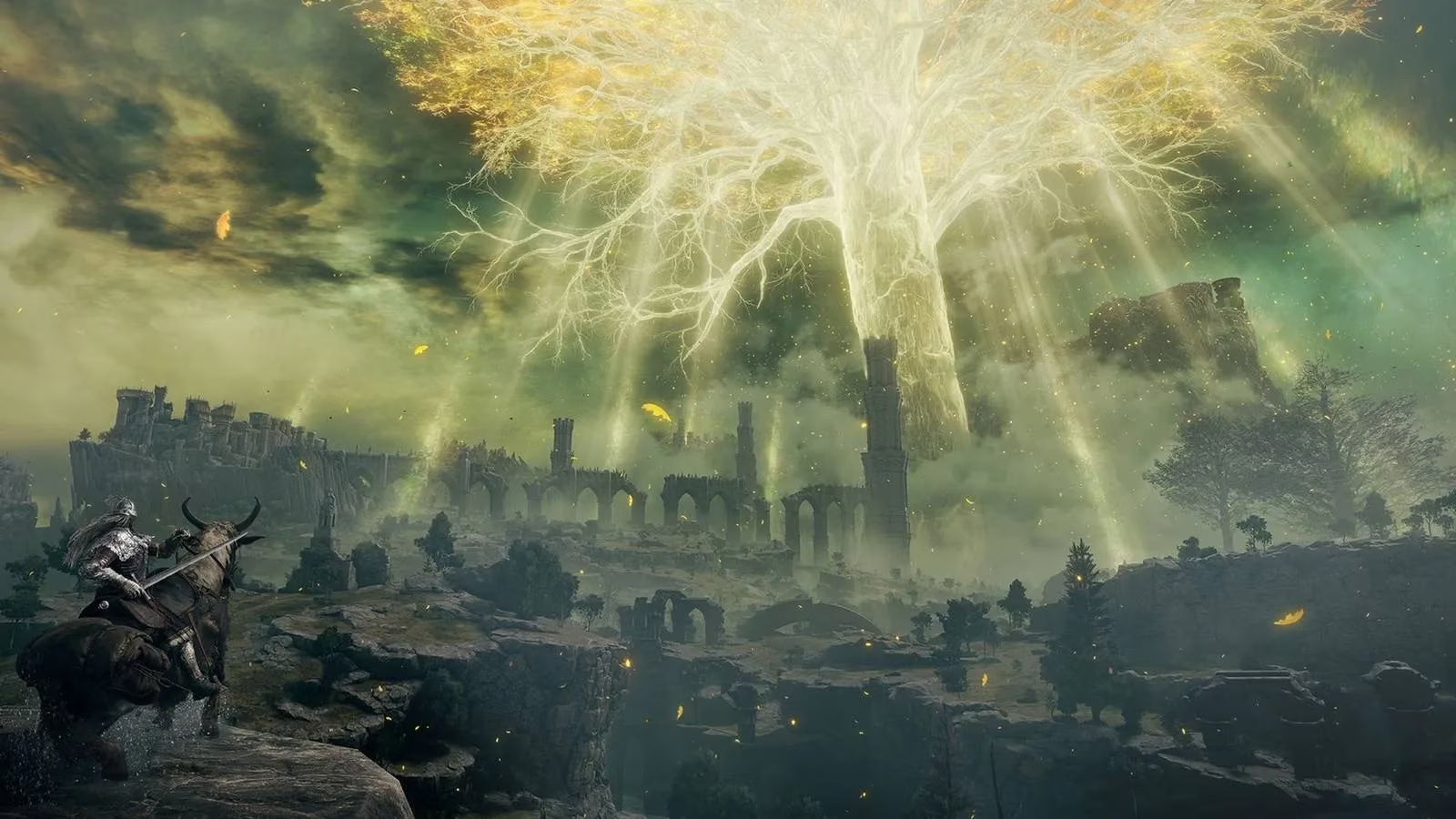
The Promise of a New Dawn
The patch notes were clear, and a little cautious. "Please note that performance - such as frame rate and resolution - may be impacted while playing with Ray Tracing on." They weren't kidding about the requirements either. To even think about toggling that shiny new button, you needed hardware like a GeForce RTX 3060 Ti or an AMD Radeon RX 6700 XT at a minimum. I fired up the game, my rig humming with anticipation. FromSoftware had built this breathtaking world; surely ray-traced global illumination and shadows would make it feel more tangible than ever. The Erdtree's golden light would cast perfect shadows, and the dungeons would feel deeper, more ominous. I was prepared for a hit to my frames, a trade-off for visual splendor. What I wasn't prepared for was the collective shrug from the community.
The Reality: A Flicker, Not a Flame
Almost immediately, my social feeds filled up. And I'm not talking about praise. Twitter, in particular, became a ground zero for... let's call it measured feedback. The complaints generally fell into two camps, and honestly, I found myself nodding along.
Camp 1: The "Is It Even On?" Crew.
This was the biggest head-scratcher. Players, myself included, spent an embarrassing amount of time toggling the setting on and off, squinting at screenshots, trying to spot the difference. The consensus? The changes to the game's lighting were subtle. Very subtle. We're talking about a game with a very specific, painterly art direction. The ray tracing didn't fundamentally transform the atmosphere; it just added a slightly more accurate, but often barely perceptible, layer of light interaction. It wasn't the revolutionary visual overhaul some had dreamed of. One meme perfectly captured the sentiment: a side-by-side comparison of a scene with RTX On and Off, with the caption simply reading, "My GPU is crying for this?" 😅
Camp 2: The "Slideshow Simulator" Gang.
Then there were the performance woes. For many players, the frame rate drop wasn't just a dip—it was a plunge. The patch notes warned us, but experiencing it was another thing. Instead of the typical stutter or frame skip, some reported the game just... slowing down. Like time itself was struggling under the weight of calculating those perfect rays. The trade-off felt brutal: sacrifice silky-smooth gameplay for lighting effects you had to pause the game to truly appreciate.
| Expectation | Reality |
|---|---|
| Transformative, cinematic lighting | Subtle, often hard-to-notice enhancements |
| A worthy performance trade-off | A steep FPS cost for minimal visual gain |
| Next-gen immersion | A checkbox feature that doesn't redefine the experience |
A Rocky Path Through The Lands Between
Overall, the reception has been pretty rocky. And that's surprising! Elden Ring has been showered with near-universal praise since launch. Hearing sustained negative feedback about anything related to it really does raise some eyebrows. It feels like a rare misstep in an otherwise flawless post-launch campaign. The community isn't angry, just... disappointed. We know how incredible this game is, and we wanted this feature to match that greatness. Instead, it feels like an afterthought—a technical showcase that doesn't quite know what to showcase in this particular world.
Part of me wonders if the issue is that The Lands Between was already so beautiful, so meticulously crafted in its own right. Its visual identity is so strong that a physically "accurate" lighting system doesn't necessarily make it "better." It just makes it different, and in this case, more demanding on our hardware.
So, where does that leave us? The ray-tracing update is here. It exists. You can turn it on and say you've experienced it. But for most Tarnished continuing their journey in 2026, the advice is simple: unless you're rocking absolute top-tier hardware and have a burning desire to see slightly more accurate shadow penumbras, you're probably better off leaving it disabled. Enjoy the buttery frame rate and the original, intended artistry of the world. The Erdtree glows just fine without it.
In the end, this whole episode is a reminder that not every bell and whistle enhances the melody. Sometimes, the song was perfect to begin with. The true expansion we're all waiting for is still the shadow looming on the horizon—the Shadow of the Erdtree itself. Now that has the potential to change the game in ways a lighting patch never could.