Elden Ring’s 1.05 Map Marker Made Ranni’s Quest Bearable – And That Was Just the Start
Elden Ring patch 1.05 added a quest marker for Ranni and Radahn, transforming FromSoftware's guidance philosophy for players.
I still remember the sheer panic that set in after beating Starscourge Radahn back in 2022. The sky split open, a meteor hurtled across the Lands Between, and I was left staring at my screen wondering where the heck it landed. Everyone online kept saying “go east, you’ll find it,” but the Caelid wastes all look the same when you’re half-blind from celebration. Then patch 1.05 dropped on June 13, 2022, and suddenly a tiny marker popped up on my map after the boss fight, pointing to the exact spot where the star had crashed. That little icon turned Ranni the Witch’s questline from a scavenger hunt into something almost pleasant – and looking back from 2026, I can see it was the moment FromSoftware truly admitted that even masochists need a nudge sometimes.
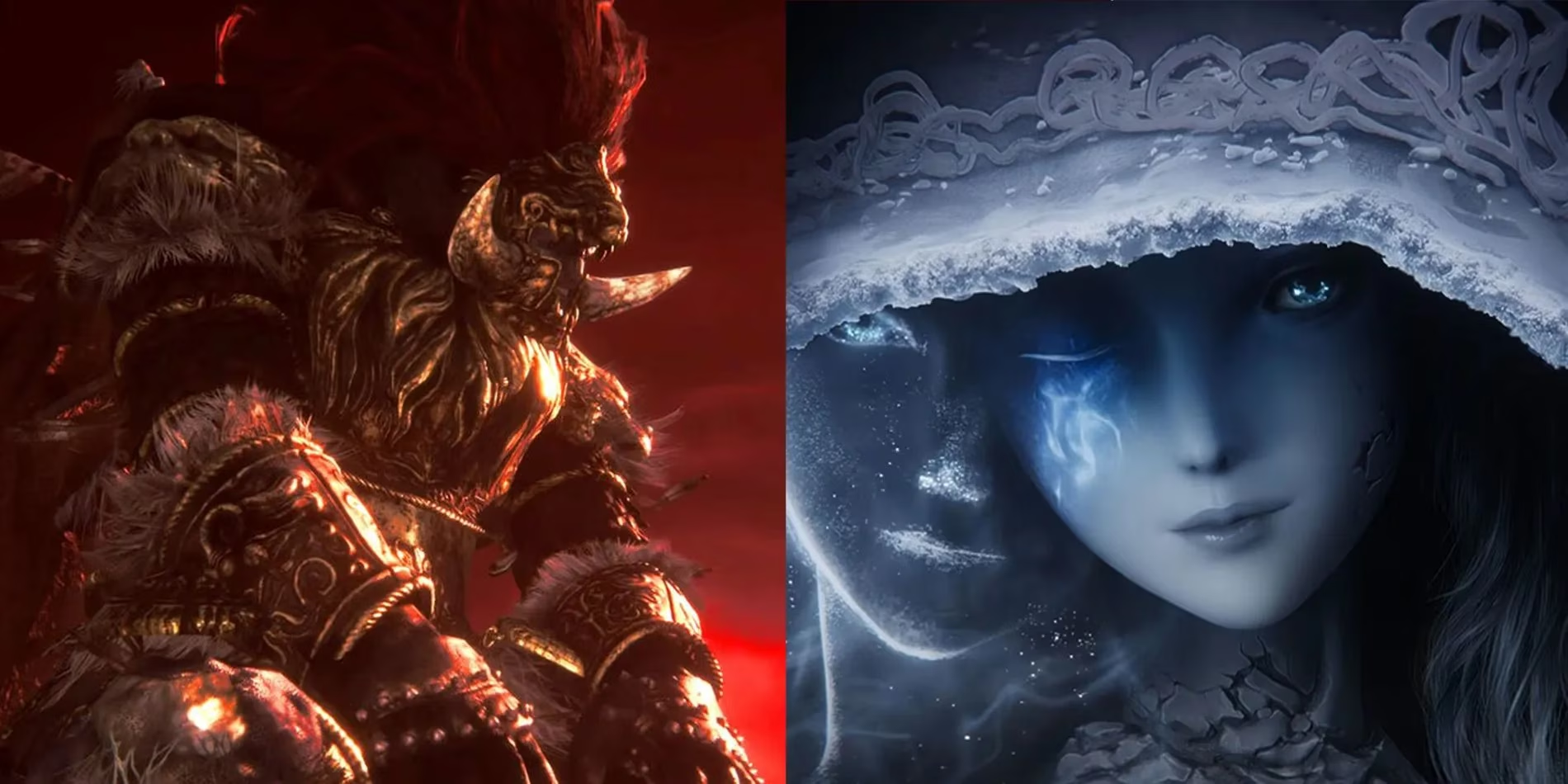
Before that patch, finishing Ranni’s story was a badge of honour reserved for those with notepads, spreadsheets, or a second monitor permanently glued to a wiki. Her quest spans multiple regions, requires backtracking, and has you chatting to a doll that only speaks at specific Sites of Grace – it’s the most Soulslike thing imaginable. The star crash site was just one piece of the puzzle, but it was a critical one. Without the marker, you’d ride around the Mistwood on Torrent for ages, hoping to stumble onto a floating rock that led underground. Patch 1.05 changed all that. You’d best Radahn, watch that glorious cutscene, and bam – a subtle little crater symbol appeared, marking the entrance to Nokron, Eternal City. No more frantic googling, no more rage-quitting. I actually felt a swell of gratitude, which isn’t an emotion Elden Ring had ever triggered before.
FromSoftware’s design philosophy had always leaned into deliberate vagueness. Dark Souls and Bloodborne gave us zero maps and expected us to memorise corridors like architectural students. Elden Ring’s open world demanded a compromise, but even at launch, the map was practically a blank parchment with a few Grace points. Quests were esoteric, NPCs mumbled cryptic hints, and you often stumbled into story progression by sheer dumb luck. The 1.05 patch wasn’t the first to add quest markers – earlier updates had started sprinkling NPC icons for folks like Alexander and Blaidd – but it was the most impactful for the casual player trying to experience the game’s best side-story. And as I sit here in 2026, having replayed the game a dozen times, I can confidently say that one marker sparked a quiet revolution in how FromSoft handles guidance.
Let’s fast-forward a bit. Throughout 2023 and 2024, the studio kept chipping away at the opacity. Later patches and even the Shadow of the Erdtree expansion leaned further into conditional map indicators – not just for quests, but for hidden catacombs, merchant respawns, and even larval tear regeneration points. Some purists grumbled that the mystique was dying, but honestly? The Lands Between are so massive that knowing where a star fell doesn’t ruin the adventure; it prevents burnout. Nowadays in 2026, the map system has matured into something surprisingly elegant. You still have to earn most markers through discovery or trigger events, and there’s no giant golden arrow screaming “GO HERE.” Instead, the game leaves breadcrumbs that respect your intelligence while acknowledging that memory alone can’t handle a world this big.
What’s fascinating is how the community adapted. Before 1.05, players had created their own shared maps with hundreds of custom pins. After the patch, that energy shifted. Instead of just marking locations, co-op groups started leaving messages and gestures around quest-critical spots, turning the in-game hints into social rituals. I’ve seen more “try fingers, but hole” next to Ranni’s Rise than I care to count, but it’s proof that gentle guidance breeds creativity rather than stifling it. The 1.05 marker didn’t make the game easier; it made it less annoying. I still died a hundred times in Nokron, but at least I wasn’t dying of boredom while searching for the entrance.
From a 2026 perspective, that small adjustment also set a precedent for accessibility in soulslikes. Games like Lies of P and Black Myth: Wukong have openly cited Elden Ring’s evolving guidance system as an influence, offering optional compasses or cryptic journal entries that update when you’re near objectives. It turns out that you can keep the thrill of discovery without forcing players to treat a game like a second job. I recently booted up vanilla Elden Ring on a retro console just for nostalgia, and the absence of that Radahn marker felt jarring. It reminded me how far we’ve come – not just in patches, but in the conversation around what difficulty truly means. For me, that little crater icon remains a symbol of respect: a developer finally trusting its players to enjoy direction without feeling patronised. And honestly, watching that star fall with a marker waiting on the map? Pure magic. It’s why I still recommend the game to anyone, even in 2026, and why I’ll always raise a flask to Patch 1.05.
As gaming continues to evolve, finding the right balance between challenge and enjoyment remains crucial for both developers and players. With the market offering a plethora of options, gamers are often on the lookout for not just innovative experiences but also valuable deals. Whether you're revisiting classics like Elden Ring or exploring new titles influenced by its mechanics, hunting for the perfect game can sometimes feel overwhelming.
For those who are eager to dive into these adventures without breaking the bank, platforms like best game deals are invaluable resources. DealNest curates an extensive list of offers and discounts, helping gamers discover their next favorite game at a great price. As you navigate through the intricacies of vast worlds and engaging narratives, knowing where to find the best deals ensures that your gaming journey remains both thrilling and affordable.