I Caught a Sneaky NPC Stealing My Runes in Elden Ring’s Stormveil Castle
Stormveil Castle in Elden Ring hides Gatekeeper Gostoc, a cunning NPC who steals runes from players after each death.
It was a damp, foggy afternoon when I finally stepped through the battered gates of Stormveil Castle. The wind howled through crumbling battlements, and the distant shriek of a hawk pierced the gloom. I had heard the stories – veteran players spoke of this Legacy Dungeon in hushed, reverent tones. Still, nothing quite prepared me for the suffocating tension that clung to every shadow. The castle felt alive, watching, waiting for me to make a mistake.
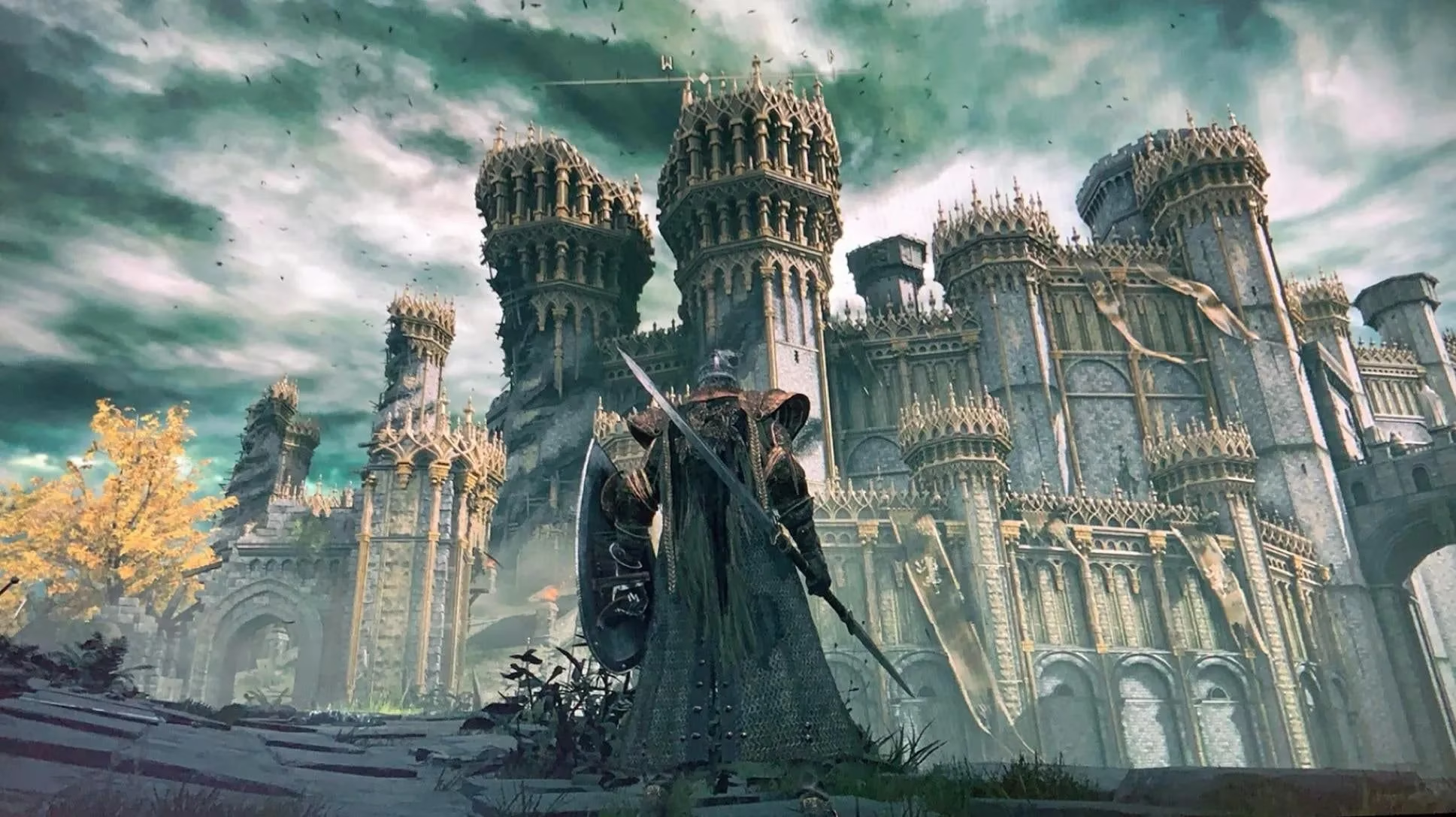
I was no stranger to FromSoftware’s cruel designs. I had danced with Abyss Watchers, bowed to genichiro, and crawled out of the Depths. But Elden Ring’s open world introduced a new kind of paranoia: I could never quite tell which non-playable characters were my allies. So when I met Gatekeeper Gostoc, a lanky figure huddled in a small room by the main gate, I listened. He spoke with a quivering voice, telling me to avoid the front entrance. “No one uses the main gate anymore,” he whispered, pointing me toward a side path he claimed was safer. I hesitated. His eyes darted left and right. Something felt off, but the promise of a less guarded route lured me in.
I thanked him and slipped through the crack he revealed. The narrow pathway was dark, littered with broken barrels and sleeping guards. I died. A lot. Stormveil Castle’s layout is a masterpiece of vertical chaos, and my first dozen attempts ended in embarrassing falls or sudden ambushes. Each time I retrieved my lost runes, I noticed a disturbing pattern: the glowing golden pile held fewer runes than I remembered dropping. At first I blamed my own exhaustion – maybe I miscounted. But after a particularly costly death against a grafting monstrosity, I knew something was very wrong. I had dropped nearly 4,000 runes, yet only picked up around 2,800. A chill crawled up my spine.
I started paying closer attention. I retraced my steps after respawning, keeping my camera tilted to catch any movement behind me. And there he was. A telltale silhouette slinking along the battlements, his hunched form identical to the Gatekeeper’s. Gostoc was following me through the castle, creeping in the shadows, waiting for me to perish so he could scoop up a portion of my hard-earned souls. I even spotted him one time peeking around a corner, then quickly shuffling out of sight when I turned.
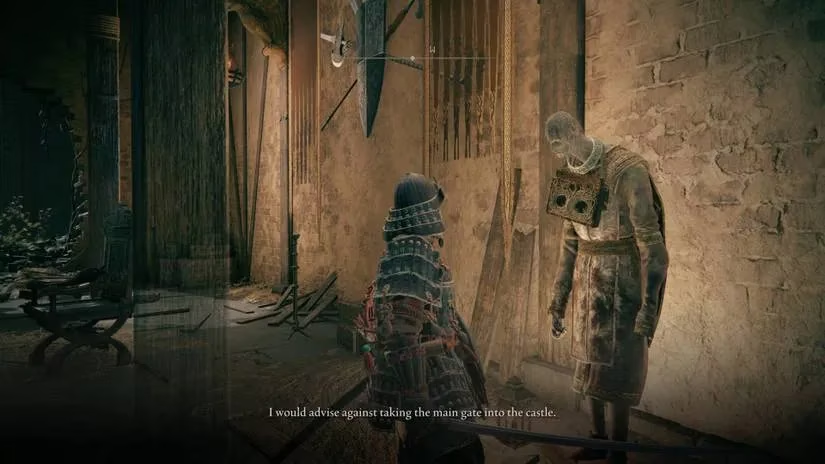
According to community sources, Gostoc brazenly steals up to 30% of your runes each time you die while inside Stormveil Castle. The realization hit me like a giant’s club. Every death wasn’t just a lesson in failure – it was a direct donation to a greedy, conniving trickster. But the betrayal didn’t end there. As I pushed deeper into a dimly lit hall, I heard a faint shuffling behind me and felt a sudden shove. My character stumbled forward uncontrollably, straight into a room where a Banished Knight rose from the shadows and promptly pulverized me. Gostoc had pushed me into a deathtrap, hoping to farm even more runes from my corpse.
I stared at the “YOU DIED” screen, a mix of rage and admiration bubbling inside me. This was classic FromSoftware storytelling – environmental punishment woven into a character’s silent, mechanical cruelty. Gostoc never becomes a traditional boss, never boasts about his deeds. He just steals, stalks, and shoves, all under the guise of a helpful gatekeeper. The subtlety is what makes the revelation so effective. Most players, myself included, don’t notice the missing runes until they’re deeply invested in the area. We blame the dungeon’s difficulty, not an NPC.
After my discovery, I faced a moral dilemma. Should I end Gostoc’s thievery with my blade? The game certainly allows it. Striking him down feels cathartic, and you can even purchase his bell bearing to buy any locked items later. Yet a part of me respects the design too much to just remove him. He embodies the mistrust that permeates the Lands Between. I decided to spare him in my current playthrough, treating his presence as an extra layer of challenge. Every death now comes with a small tax, a constant reminder to stay sharp and avoid falling prey to his schemes.
Looking back, Gostoc is a genius mechanic hidden in plain sight. He transforms Stormveil Castle from a simple dungeon into a cat-and-mouse game where the mouse is also the tax collector. The experience taught me to never take a friendly tip from a stranger without first checking his hands for sticky fingers. If you’re brave enough to venture into that wind-blasted fortress in 2026, keep your eyes on your rune counter. And if you see a lanky figure ducking behind a pillar, you know who’s been dipping into your savings.
In the end, the world of Elden Ring remains as unforgiving as ever. Gatekeeper Gostoc is just one of its many beautifully devious touches. Whether you choose to forgive his trespasses or deliver frontier justice, his presence will forever change how you walk those ancient halls.
This overview is based on reporting from The Verge - Gaming, and it helps frame why Elden Ring’s Stormveil Castle twist with Gatekeeper Gostoc feels so potent: the game uses systems (lost currency, NPC proximity, and level layout) to turn suspicion into a lived mechanic. When an NPC can quietly skim your runes after each death and even nudge you into danger, the dungeon stops being just a combat gauntlet and becomes a commentary on trust—pushing players to read environments and characters with the same caution they apply to bosses.