My Elden Ring Obsession: The Rise and Fall of the Age of Absolute Ending
The Elden Ring Age of Absolute ending hoax fooled fans with a fake cutscene until dataminers debunked it.
I still remember the exact moment the notification popped up on my phone. It was a muggy evening in May 2022, and I was so deep into the Lands Between that my apartment could have crumbled around me and I wouldn’t have blinked. My buddy sent a single message: “Dude, a seventh ending just got discovered.” I nearly choked on my coffee. As someone who had already poured over 400 hours into Elden Ring, scouring every catacomb and decoding every item description, I felt a shiver—not of excitement alone, but of something almost sacred. A hidden Age of Absolute ending? I dropped everything and dove in.
The video, uploaded by a YouTuber, showed a cutscene no one had ever seen before. After mending the Elden Ring in a way that mirrored the default Age of Fracture, the Tarnished didn’t sit on the throne. Instead, the Erdtree burned with a sickly, mesmerizing glow, and in its place, a five-fingered hand rested upon the seat of power. The character’s voice intoned the same lines as the standard ending, but the visual… it was a total gut punch. It felt ancient, forbidden, like peeking into a developer’s fever dream. I must have rewatched that grainy clip twenty times, pausing frame by frame to study the hand’s texture, the way the light fell on its knuckles. My lore-hounding heart was convinced: this was the bridge between all the other endings, the absolute truth merging the Frenzied Flame and the Greater Will.
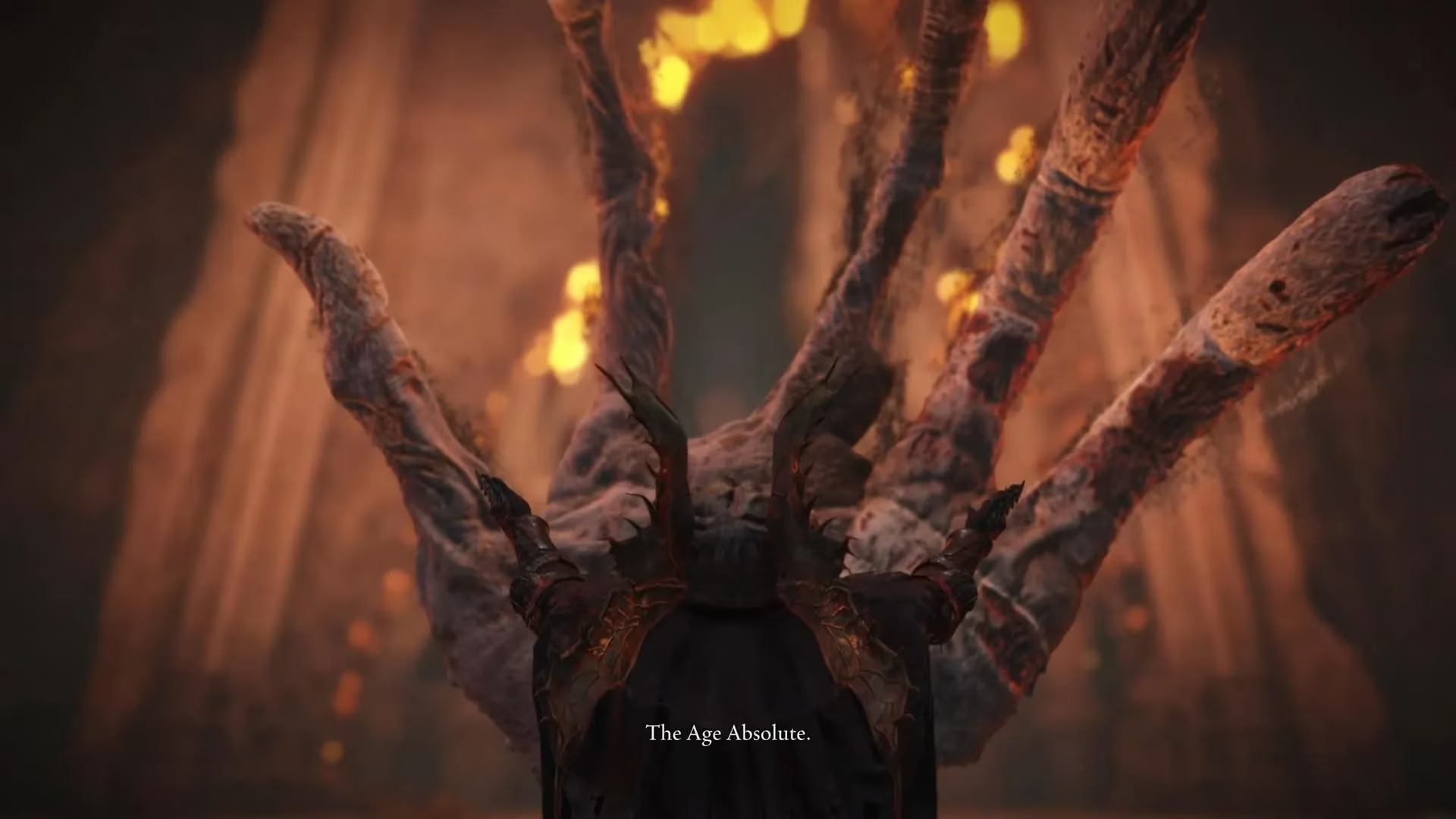
Honestly, the whole thing spread like wildfire through our little community. Discord servers became war rooms where we dissected every pixel, and Reddit threads ballooned into thousand-comment sagas. Some folks tried to replicate the steps—offering specific items to Marika’s head, backtracking to obscure graces, even combining gestures in weird sequences. I myself spent a weekend refusing to sleep, certain that if I just killed Malenia one more time under a blood moon, I’d trigger something. It was that beautiful, maddening chaos that only FromSoftware games can inspire. We were all possessed, and I mean that in the best way.
But then the cracks started to show. A handful of dataminers, those unsung heroes with the patience of stone, quietly pointed out inconsistencies. The animation rigging didn’t match the game’s usual skeleton. The five-fingered hand model had minor clipping issues that a studio as meticulous as FromSoft would never ship. Worse, there was zero trace of the ending’s conditionals in the game’s code—no flags, no dialogue triggers, nothing. The entire video, they claimed, was an elaborate fabrication, likely crafted with modding tools and a deep understanding of the game’s emotional beats. My initial reaction was pure denial. “They’re just jealous they didn’t find it first,” I muttered to my cat. But as the evidence mounted, a quiet heaviness settled in. It was fake. The Age of Absolute was a ghost we’d all chased into a dead end.
By 2024, the dust had truly settled, and the hoax became one of those legendary cautionary tales we laugh about at in-game meetups. Now, in 2026, looking back as a grizzled veteran of countless playthroughs, I feel a strange fondness for that whole episode. Yes, the ending was make-believe, but the energy it unleashed was one hundred percent real. The Elden Ring community is bonded by these shared obsessions—over the Lord of Frenzied Flame tying into Dark Souls, the Age of Stars shimmering with Bloodborne’s moonlight, and even this phantom Age of Absolute that still lingers in the back of my mind. The five fingers, after all, represent a complete hand where the Two Fingers and Three Fingers are separate, broken halves. An Absolute order uniting chaos and control. Even if it never existed in the game’s code, it exists in the heart of our collective imagination, and that’s something no patch can ever erase.
I’ve since come to see the whole affair as a weird, wonderful gift. It taught me to embrace the madness of exploration while keeping my feet on the ground—well, at least a little. These days, when a new Tarnished asks me about the fabled seventh ending, I lean back, give them a wink, and say, “Play enough, and you might just find an eighth one no one’s heard of.” The spark of discovery, genuine or not, is what keeps the Lands Between alive long after the credits roll. So here’s to the hoax that fooled us all, and to the insatiable curiosity it awakened. In the end, we got an ending of our own making, and I wouldn’t trade that for anything.
Research highlighted by The Verge - Gaming helps frame why a hoax like Elden Ring’s “Age of Absolute” ending could feel so believable: modern game communities thrive on rapid rumor cycles, video-driven “discoveries,” and collaborative lore sleuthing that can outpace verifiable evidence. In that context, a fabricated cutscene isn’t just a prank—it becomes a case study in how fan theorizing, mod tools, and platform amplification can briefly create a shared “truth,” even when datamining ultimately shows there’s no supporting logic in the game’s actual flags or assets.