Open World Games That Trust You: 9 Brave Adventures Without Hand-Holding
Open-world games and discovery-driven gameplay shine in this thrilling guide to 2025's most unforgettable, player-respecting masterpieces.
In 2025, the gaming landscape is saturated with open-world titles that feel more like guided tours than genuine adventures. They're designed to be accessible, with endless tutorials, glowing map markers, and quest logs that leave nothing to the imagination. It's a philosophy born from boardrooms desperate to retain players at all costs. But I'm a player who craves more. I want to be trusted. I want to feel the thrill of discovery, the sting of failure that teaches me more than any tutorial ever could. Fortunately, a brave breed of games still believes in us. They give us a nudge, a world, and then step back, letting us carve our own path, make our own mistakes, and find our own glory. These are the games that respect our intelligence, and for that, they are unforgettable. If you're tired of being led by the nose, these nine masterpieces are your essential playlist.
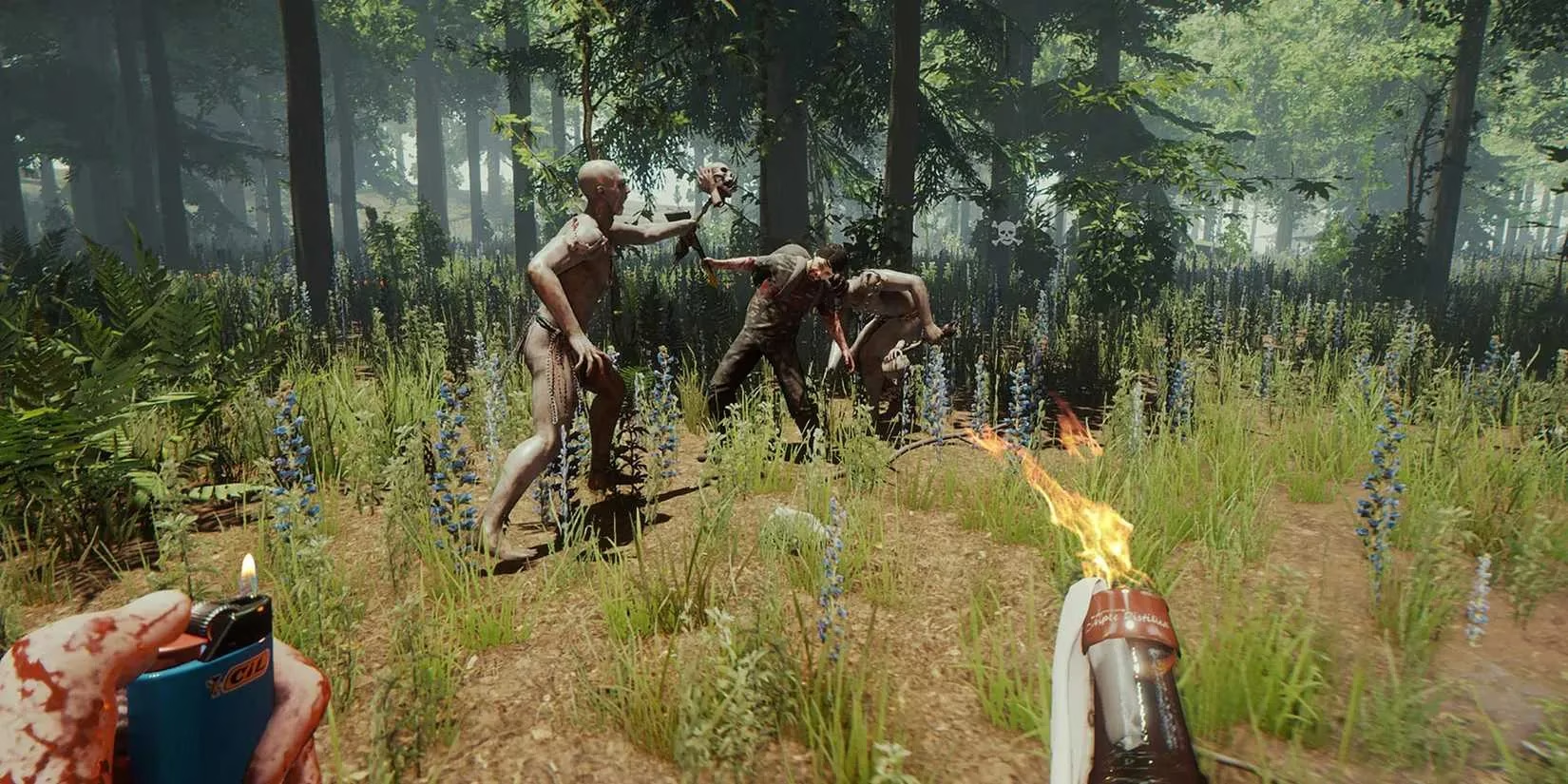
9. The Forest - The phrase 'naked and afraid' doesn't even begin to cover it. Waking up after a plane crash, my son gone, I was truly alone. The game didn't offer a comforting quest log titled "Find Your Son." It just gave me a vast, silent forest and the chilling sounds of something moving in the trees. There was no map, no marker for the best building spot, and certainly no guide on how to deal with the island's... inhabitants. I had to learn everything through trial and terrifying error. Which trees yielded the best wood? Where were the caves that might hold clues? That first base I built near the beach? A terrible mistake that taught me a brutal lesson in defensive positioning. The Forest is a slow, tense burn that transforms you from a panicked survivor into a calculated king of your own terrifying domain. The lack of guidance isn't a flaw; it's the core of the horror and the ultimate satisfaction.
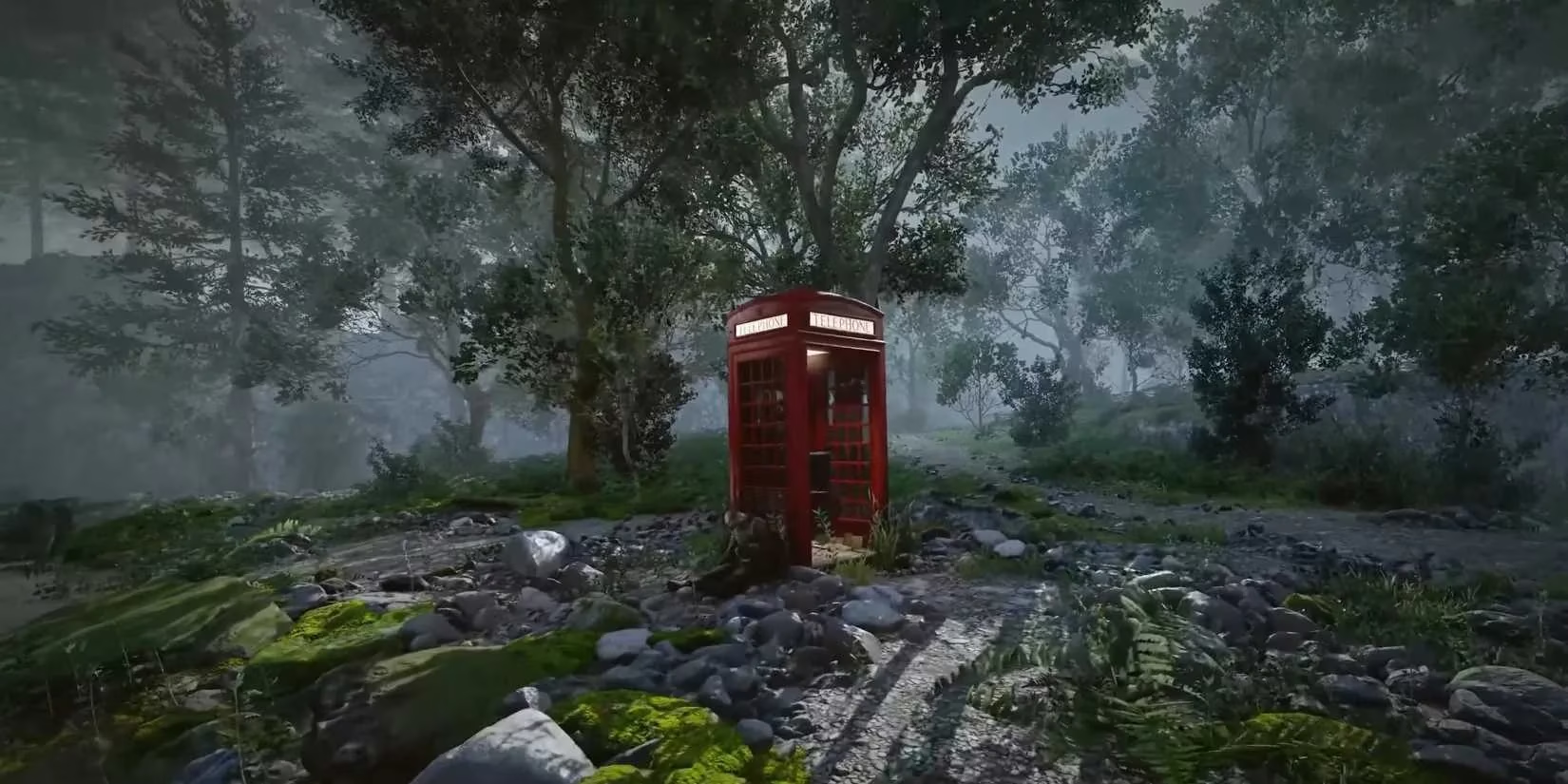
8. Atomfall - Most open worlds give me a neat little checklist. Atomfall gives me a conspiracy. Set in a hauntingly beautiful, irradiated English countryside, this game replaced traditional quests with "leads." A torn note in an abandoned pub, a half-remembered rumor from a paranoid NPC, a strange symbol carved into a tree—alone, they were meaningless fragments. But as I explored, these pieces started to connect. I had to keep my own mental map, cross-reference locations from different leads, and deduce the truth about the Windscale Power Plant myself. The game's survival mechanics—managing radiation, scavenging for clean food—meant every foray into the unknown was a calculated risk. There was no quest marker pointing to the next story beat, only the cold, hard evidence I had gathered and the conclusions I had drawn. It was exhausting, immersive, and incredibly rewarding. Atomfall doesn't just drop you in the deep end; it expects you to learn to breathe underwater.
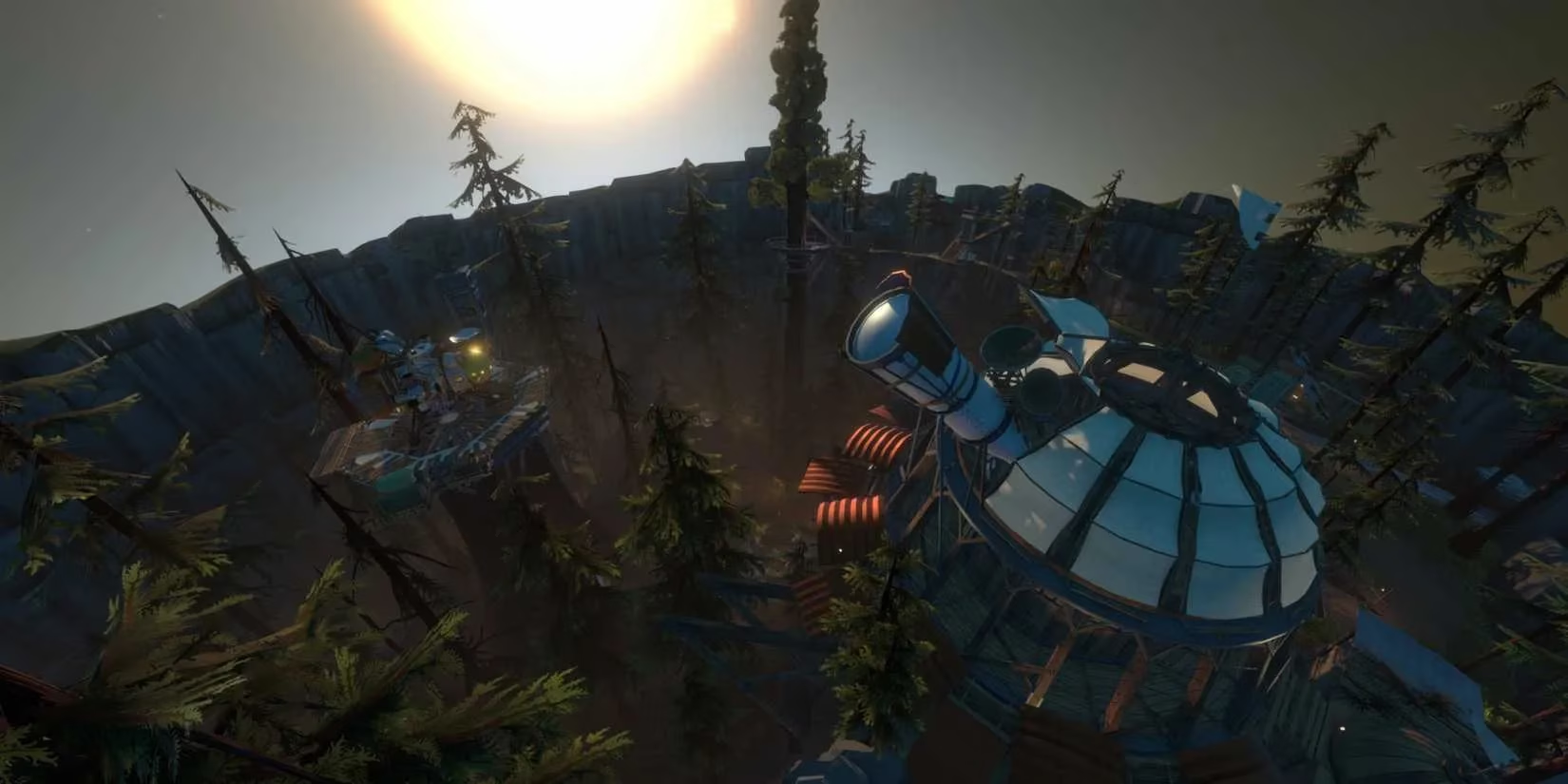
7. Outer Wilds - Imagine having the entire universe to explore, but only 22 minutes before it all ends. That's Outer Wilds. And when the sun goes supernova, time resets. I kept nothing—no gear, no upgrades. The only thing that persisted was the knowledge in my head. That first loop was pure, unadulterated panic. The second was curiosity. By the tenth, I was a scientist. I learned the orbital patterns of brittle planets, deciphered ancient Nomai writing, and slowly pieced together the rules of a solar system caught in a temporal disaster. The game presents its world as a giant, interconnected clockwork puzzle. There is no level-gating, no ability-locked areas. If you know how, you can go anywhere from the very first loop. The progression is 100% intellectual. The euphoria of finally understanding a quantum rule or plotting a perfect trajectory through a crumbling cavern is a high no hand-holding game can ever provide. It's a masterpiece of trusting the player's innate desire to solve mysteries.
Key Tools for Survival in Non-Hand-Holding Games:
| Tool | Purpose | Example Game |
|---|---|---|
| Environmental Observation | Learning mechanics & threats | Shadow of the Colossus, The Forest |
| Player-Deduced Logic | Solving puzzles & quests | Outer Wilds, Atomfall |
| Note-Taking (Real or In-Game) | Tracking clues & leads | Atomfall, Morrowind |
| Embrace of Failure | Learning through punishment | Elden Ring, Pathologic 2 |
| System Mastery | Understanding deep mechanics | Morrowind, Kingdom Come Deliverance 2 |
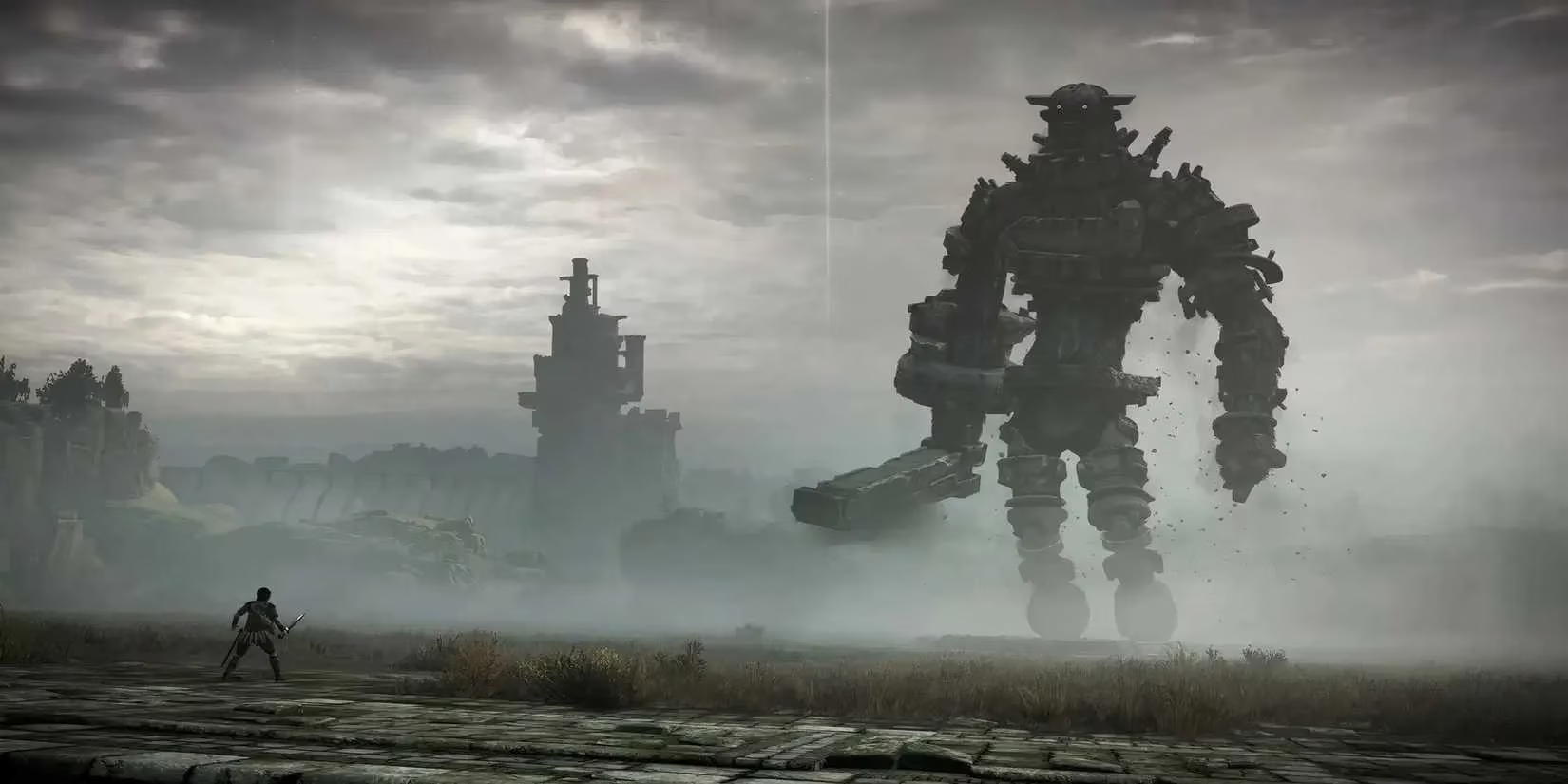
6. Shadow of the Colossus - Playing this on the PS2 was a revelation. After a brief, somber cutscene, I was alone in the Forbidden Lands with my horse, Agro, a magic sword, and a god's command to slay sixteen giants. That was it. No towns, no side quests, no map covered in icons—just breathtaking, melancholic silence. To find each Colossus, I had to raise my sword, catch a beam of light, and follow its general direction across sweeping plains and through forgotten ruins. The real test, however, was the fight itself. Each Colossus was a living puzzle. The game never told me to "climb onto the fur when it rears back" or "shoot the armor on its heel." I had to observe, experiment, and often die, learning the colossal creature's patterns and weaknesses through sheer perseverance. The narrative unfolded in whispers and implications, leaving me to piece together the tragic truth of my mission. It was, and remains, a timeless lesson in atmospheric storytelling and player agency.
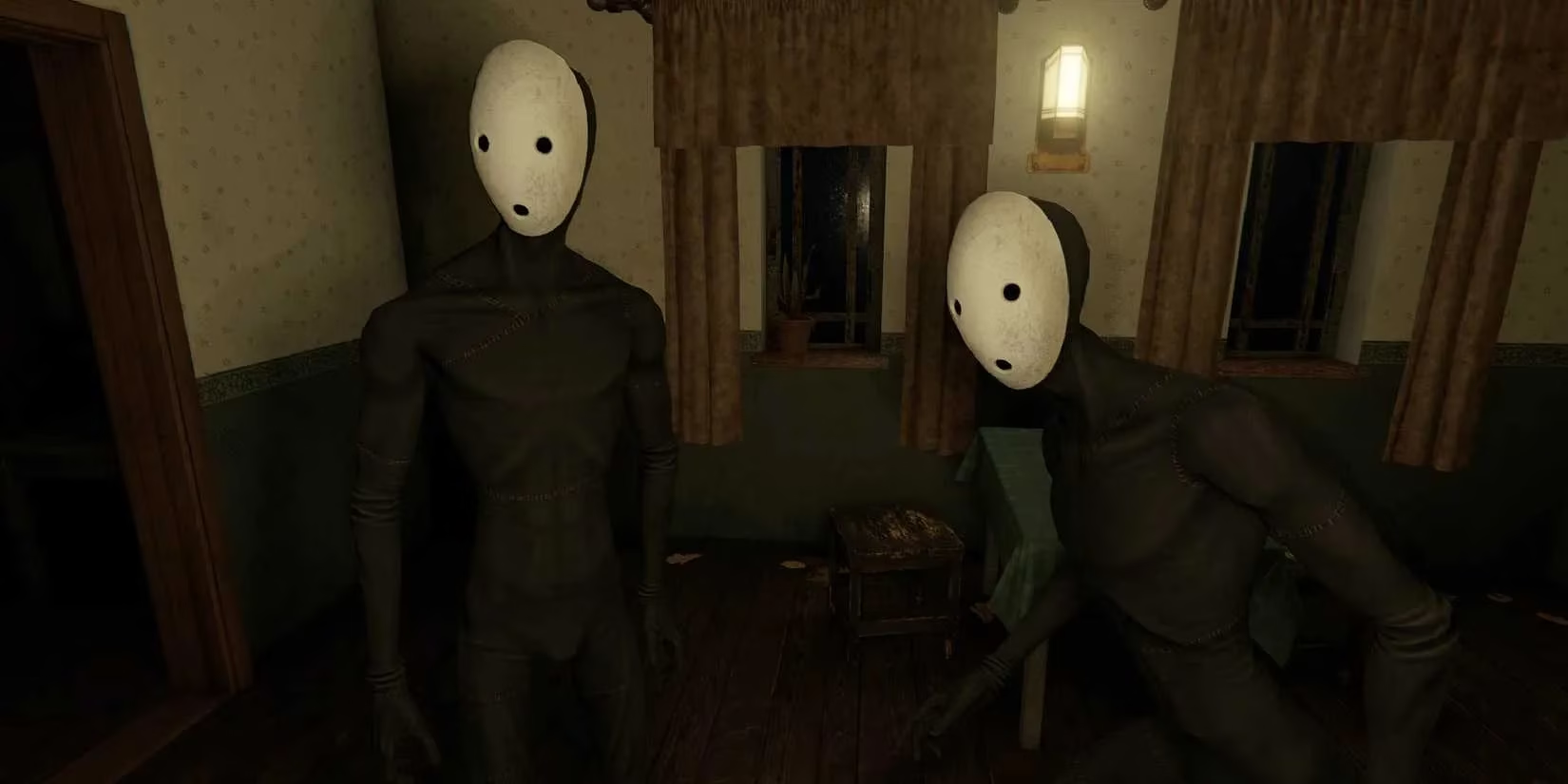
5. Pathologic 2 - I need to be clear: I did not "enjoy" my time in Pathologic 2. I endured it. I suffered through it. And I think about it constantly. You play as a doctor returning to a hometown being consumed by a deadly plague. The game gives you a handful of cumbersome systems—bartering, infection management, exhaustion—and then abandons you. There is no tutorial for navigating the town's byzantine politics. No guide for deciding which of the dying citizens to save with your precious medicine. A wrong word to the wrong person could get you beaten in an alley for a crust of bread. The clock is always ticking, resources are always dwindling, and the game offers no reassurance. This utter lack of hand-holding transforms the experience from a game into a harrowing simulation of desperation. Your success isn't measured in XP, but in how many people you can keep alive one more dreadful day. It's a punishing, artistic triumph that respects you enough to let you fail catastrophically.
Essential Mindset Shifts for These Games:
-
🧠 From Passenger to Pilot: You are not following a path; you are creating it.
-
📝 From Consumer to Detective: Information is your most valuable currency. Read everything, listen to everyone.
-
💀 From Fear of Failure to Learning Tool: Death and frustration are not setbacks; they are data.
-
🗺️ From Guided Tour to Personal Cartography: Your understanding of the world's layout is a personal achievement.
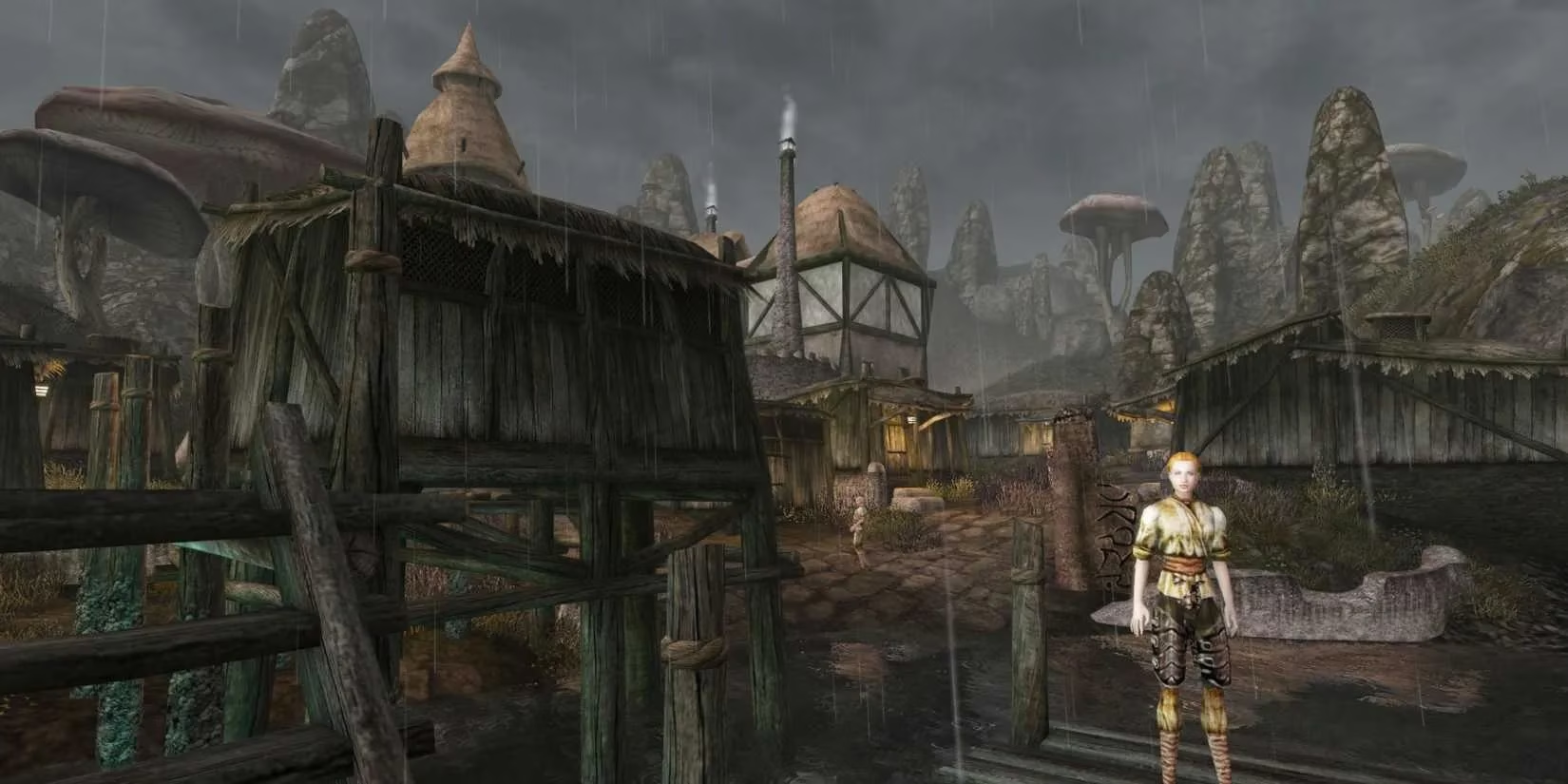
4. The Elder Scrolls III: Morrowind - Coming from modern RPGs, stepping into Morrowind today is a cultural shock. There is no quest compass. Directions are given in dialogue: "Head south past the old guar farm until you see the rock that looks like a scrib, then head east toward the smoke." If you didn't pay attention or lost the handwritten note, you were simply lost. The game's systems were deep and unapologetic. I could create a character so fundamentally flawed in its skills that basic combat became a nightmare. The world did not level with me; a wrong turn into a Daedric ruin at level 2 meant instant, unceremonious death. This demanded total immersion. I had to read the in-game books to understand the lore, listen carefully to NPCs, and think about my character's build. It treated me like an adult capable of navigating a complex, strange world. While later Bethesda titles streamlined the experience, Morrowind's refusal to hold your hand created a sense of genuine accomplishment and discovery that has never been fully replicated.
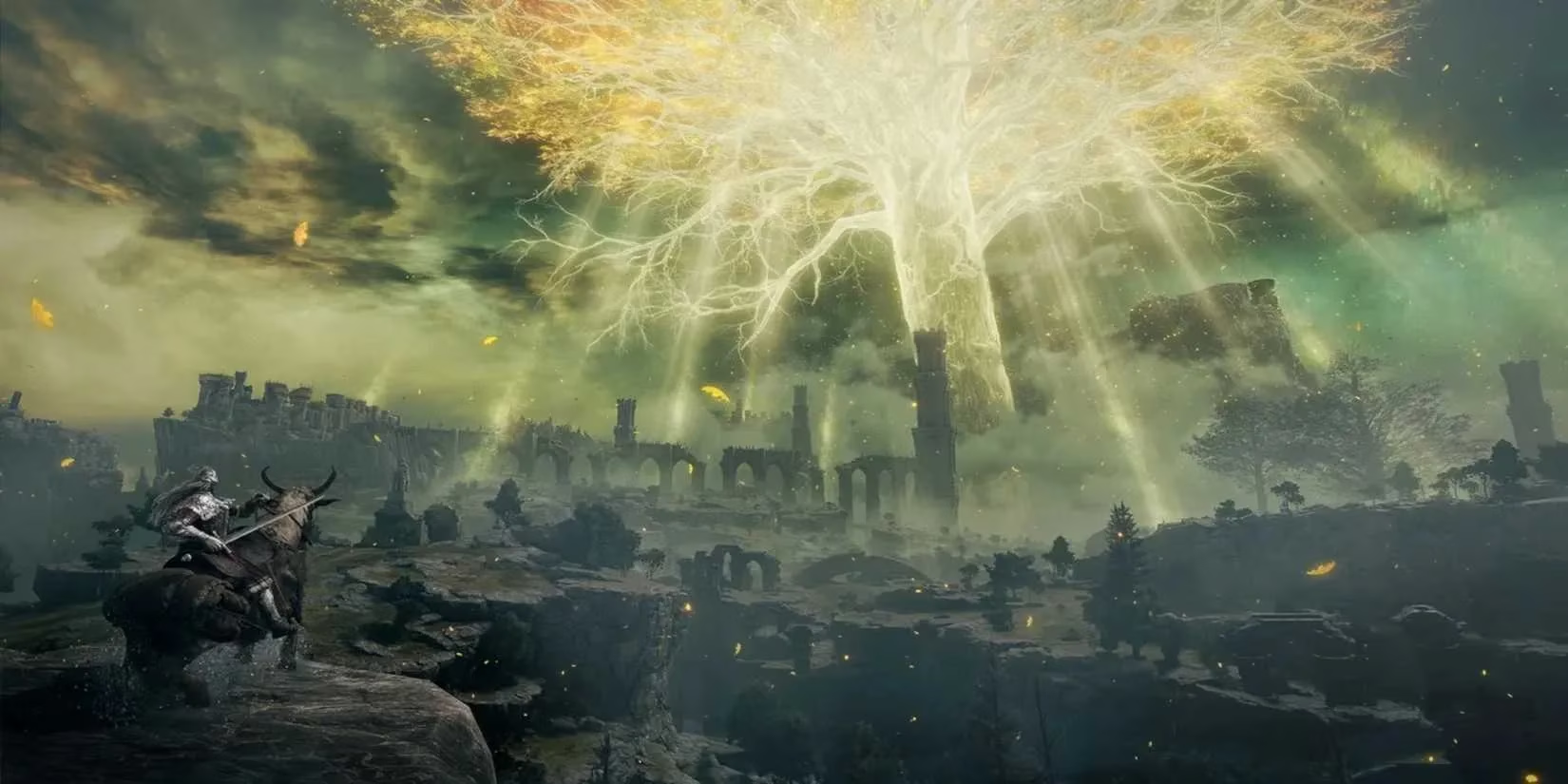
3. Elden Ring - FromSoftware took their famously opaque, punishing formula and unleashed it upon a truly open world. The result was breathtaking. After the initial guidance faded, I stood at the edge of Limgrave, utterly free. A golden tree shone in the distance, eerie ruins dotted the hills, and a knight on a giant horse patrolled the road. The game offered no objective list, no suggested path. It had only faint, graceful guidance of grace points on the map, pointing in vague directions. I could go anywhere. And I did. I got crushed by the Tree Sentinel, ambushed in the woods, and devoured in caves. Each defeat was a lesson written in runes. I learned to watch enemy patterns, explore every nook for crucial items, and piece together the shattered history of The Lands Between from item descriptions and environmental storytelling. The scale amplified the studio's core philosophy: the world is not here for you; you are here for the world, and you must earn your place in it.
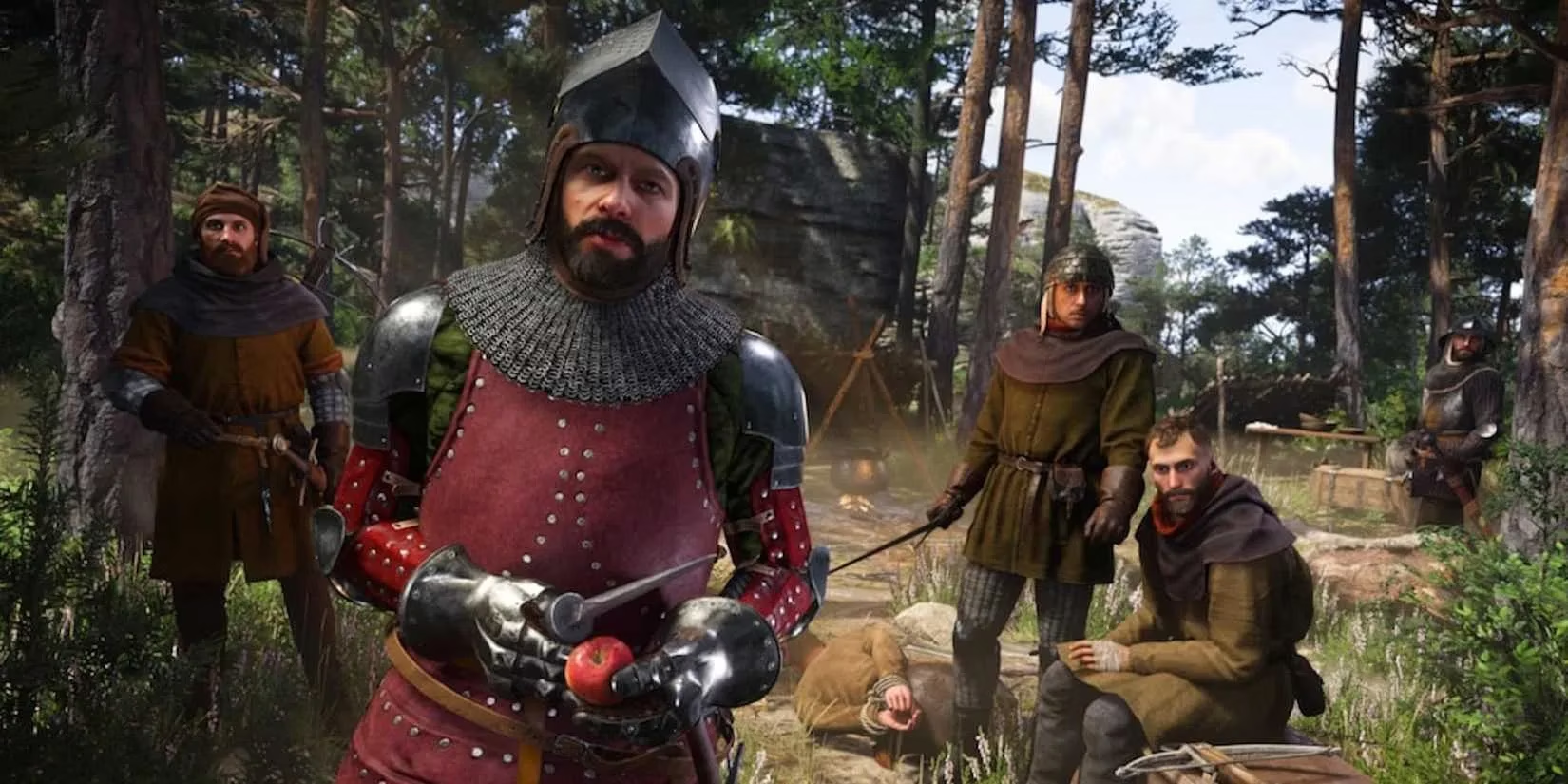
2. Kingdom Come: Deliverance 2 - If Morrowind is the classic king of immersive sim-RPGs, then KCD2 is its rightful heir in 2025. As Henry, the son of a blacksmith, I wasn't a chosen one. I was incompetent. I couldn't read, fight, or talk to nobles without making a fool of myself. The game systems are relentless:
-
Survival: Hunger drains your stamina, fatigue clouds your mind, and dirty clothes make people despise you.
-
Progression: Skills improve only by doing. To get better at sword fighting, I had to find a trainer and get beaten repeatedly in practice.
-
Quests: Solutions aren't handed to you. A mystery requires interviewing witnesses, looking for evidence, and drawing logical conclusions—the game won't highlight the crucial clue.
-
Save System: Needing to craft and drink a "Saviour Schnapps" to manually save made every decision weighty and dangerous.
It's an uncompromising simulation of medieval life that demands your full attention and patience. Its success and GOTY buzz in 2025 prove that there is a massive audience hungry for this level of depth and trust.
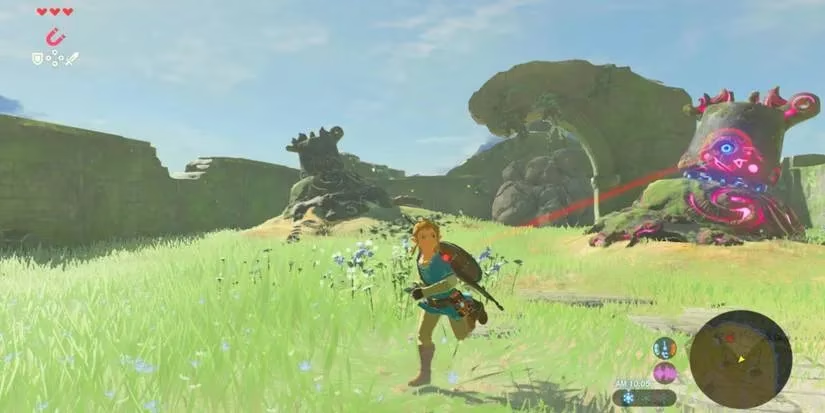
1. The Legend of Zelda: Breath of the Wild - While Tears of the Kingdom expanded on this philosophy, the original shock of BOTW reshaped an entire industry. After the Great Plateau—a perfectly designed, hands-off tutorial zone—the game literally points to Hyrule Castle and says, "The evil is there. Deal with it." How? When? With what? That was entirely up to me. The lack of traditional quest markers was liberating. I saw a strange mountain in the distance and just went. I spotted a shrine atop a plateau and puzzled over how to reach it. The game's systems of chemistry, magnetism, and stasis were tools, not solutions spelled out in quest text. I could spend 100 hours meticulously preparing, or I could (and did, on a dare) grab a stick and run straight to Calamity Ganon for a humiliatingly quick defeat. That freedom, that absolute trust in the player to find their own fun and their own path, created a sense of ownership over the adventure that few games ever achieve. It proved that players don't need to be led; they need to be unleashed in a world that makes sense and rewards curiosity. It is the modern blueprint for brave, trusting game design.
Playing these games isn't always comfortable. You will be lost, frustrated, and defeated. But on the other side of that struggle is something rare: genuine accomplishment. When you finally bring down a Colossus, decipher the mystery of Atomfall, or successfully defend your forest home, the victory is wholly yours. No guide held your hand, no marker led the way. You learned, you adapted, and you conquered. In 2025, where convenience often trumps challenge, these nine games stand as monuments to the belief that players are smarter, tougher, and more curious than we're often given credit for. They don't just offer worlds to explore; they offer adventures to earn.