What Deathbirds And Death Rite Birds Really Mean In Elden Ring Lore
Deathbird lore and Elden Ring field boss encounters reveal the haunting legacy of death worship in Limgrave's eerie nighttime battles.
I still remember my first purely accidental encounter with a Deathbird. I was trotting around Limgrave at night on Torrent, completely mesmerized by the glowing Erdtree branches, when the music just… changed. Eerie, chittering notes filled my headphones and a boss health bar appeared at the bottom of my screen. I panicked, spinning the camera wildly, and caught a glimpse of this twisted, skeletal thing swooping down at me on wings that shouldn't logically be able to hold its body. That moment stuck with me, and years later in 2026, the cryptic lore of these avian nightmares still fascinates me as much as it did on launch day.
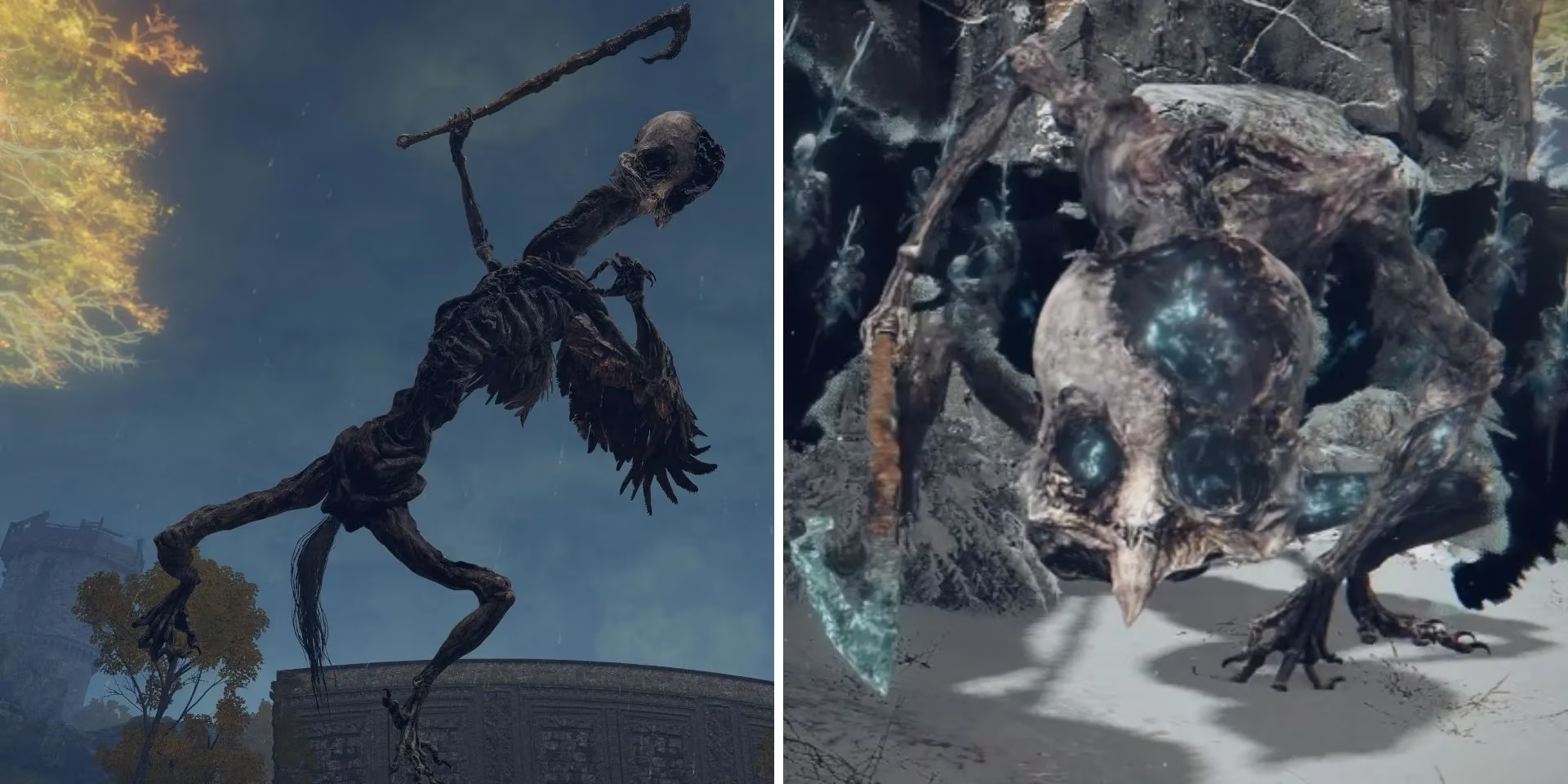
Look, most of us have bumped into Deathbirds while galloping across the Lands Between. They’re withered, bird-like abominations with leering skull faces, tattered wings, and a collection of ash-covered pokers that hit ridiculously hard. At first glance, these seemingly random field bosses and their larger, even scarier Death Rite Bird variants appear to be nothing more than nighttime challenges designed to keep us on our toes. But if you’re like me—someone who pores over every item description—you’ll discover a rabbit hole of ancient death worship. These creatures are psychopomps for a forgotten religion, a faith of reincarnation that thrived long before Queen Marika’s Golden Order painted everything gold.
That First Terrifying Dance in the Dark
Between Limgrave and Liurnia of the Lakes, if you explore by night, you’ll probably stumble across them the same way I did. Ominous music swells, your horse spooks, and suddenly you’re dodging wild swings from a poker that looks like it just got raked out of a furnace. Deathbirds attack with purely physical strikes, but their beak pecks can bypass shields, and their movements are so janky and S-shaped that predicting them feels like learning a new language. Ride away at a full gallop and you’ll escape them—Torrent doesn’t judge—but stay and fight, and you’ll get a brutal yet fair duel. Honestly, the normal Deathbirds are a cakewalk compared to the Death Rite Birds that show up later. Those guys? They bring Ghostflame. And Frostbite. And a whole lot of pain.
But Wait—There’s Lore in Those Items?
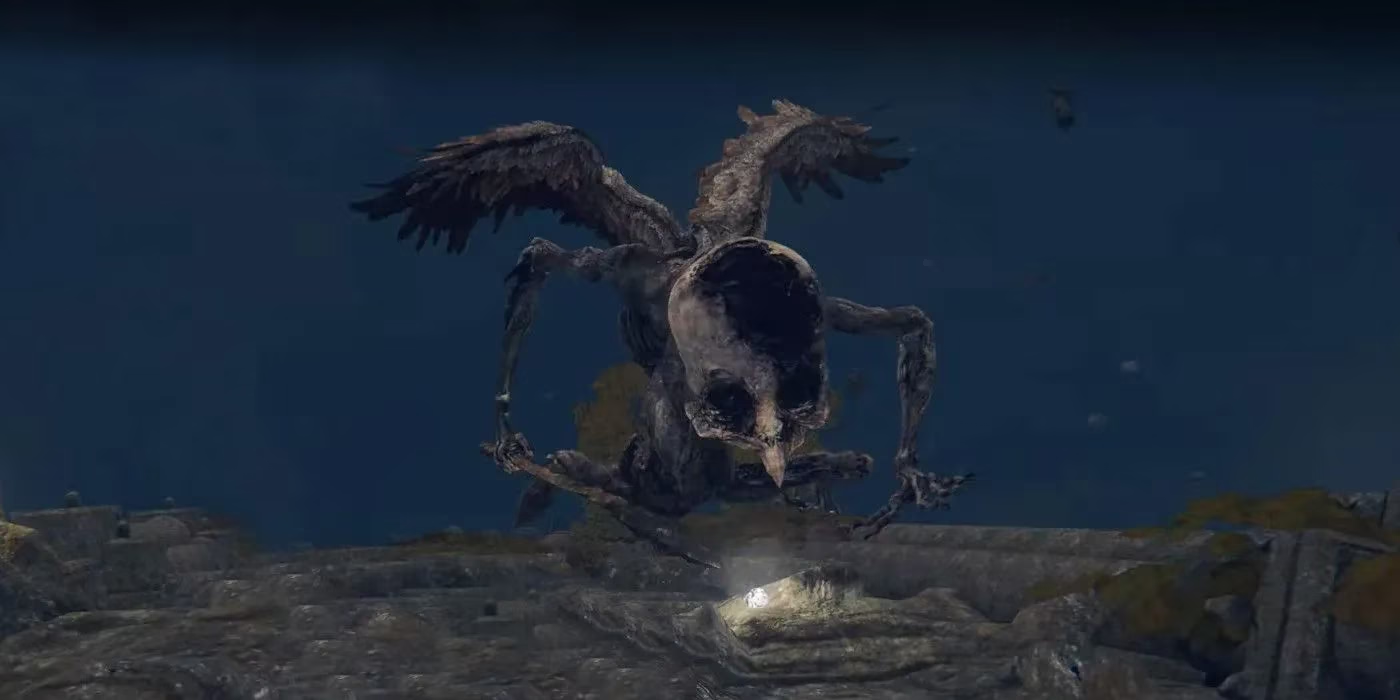
After defeating my first Deathbird in Stormhill, I picked up the Blue-Feathered Branchsword talisman. The description floored me: "The heart sings when one draws close to death, and thus does one cling so tenaciously to life—to render up a death worth offering…" Wait, what? A talisman tied to ancient death rituals? Then the Red-Feathered Branchsword in Liurnia echoed a similar sentiment. Suddenly I wasn’t just slaying a spooky bird; I was participating in a rite older than the Erdtree. The Sacrificial Axe dropped by the Weeping Peninsula Deathbird cemented this: "Hatchet used in ancient sacrificial rite. A Deathbird is depicted as a malevolent deity." So Deathbirds aren’t just monsters—they were worshipped.
And it gets better. The Twinbird Kite Shield, dropped near Leyndell, features a vividly painted twinbird and reveals that this twinbird is "the envoy of an outer god, and mother of the Deathbirds." That’s right, the Deathbirds are children of an Outer God’s emissary. They function almost like angels in real-world Abrahamic faiths, or like the Two Fingers for the Golden Order—divine messengers who interpret the will of a higher power. The death religion they represented wasn’t about morbid doom and gloom; it emphasized clinging fiercely to life so that one could offer up a glorious end. The Branchsword talismans even grant bonuses at low health, mechanically reflecting this tenet. It’s a fascinating twist: fight tooth and nail to survive, not to avoid death, but to make your eventual death a worthy sacrifice.
The Death Rite Birds and the Secret of Ghostflame
Now, the Death Rite Birds? They’re on another level—literally and lore-wise. Unlike the purely physical Deathbirds, these larger, ethereal horrors wield potent Death Sorceries. When I first fought the one in Caelid and looted the Death’s Poker Greatsword, I read: "Barbed rod carried by Deathbirds. The birds are graveyard fire keepers; it is said they rake out the ashen remains of the dead from their kilns." Kilns! The pieces clicked together after I collected the Explosive Ghostflame Sorcery in the Consecrated Snowfield: "In the time when there was no Erdtree, death was burned in ghostflame. Deathbirds were the keepers of that fire."
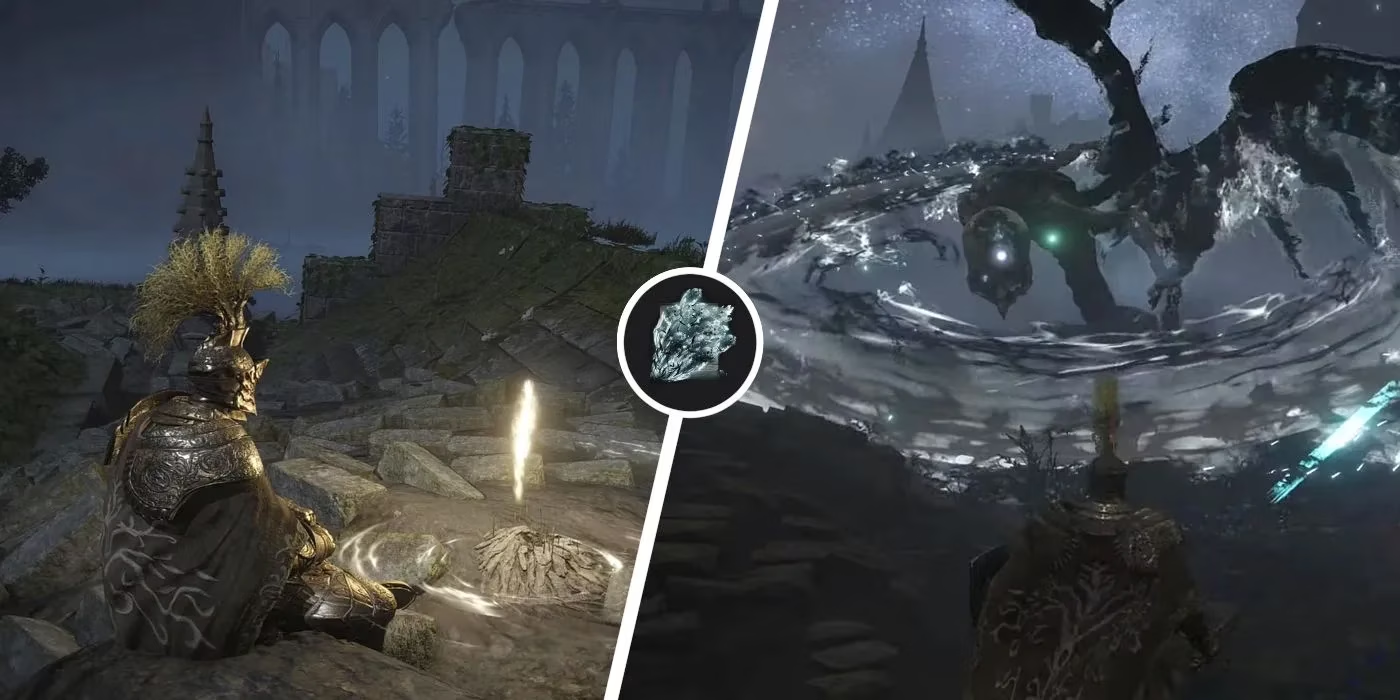
So before the Erdtree, when you died, your body was cremated in pale, chilling Ghostflame—and Deathbirds were the ones tending those fires. They’d literally rake the ashes. The Ancient Death Rancor sorcery summons "cinders of the ancient death hex, raked from the fires of ghostflame by Deathbirds." That visual is metal as hell. But why burn the dead? The Death Ritual Spear from the Mountaintops of the Giants gives us the answer. It says, "Ritual spear used by priests of old who were permitted to come among the Deathbirds. The priests became guardians of the birds through the rite of Death, which also serves as an oath sworn to their distant resurrection." This wasn’t simple cremation—it was a process of purification and eventual rebirth.
I started looking closer at the models. The normal Deathbirds have unmistakable human body parts protruding from their pallid flesh. The larger Death Rite Birds, when you study their unfurled wings, reveal ghostly figures holding those very ritual spears. The ancient priests literally fused themselves with the birds in an oath, acting as guardians until their promised resurrection day. It’s a grim, beautiful commitment to a cycle of death and renewal that the Erdtree’s own resurrection mechanics may have later co-opted.
The Spirit World and the Lampwood
One more layer that made my jaw drop: Helphen’s Steeple, a greatsword from a Tibia Mariner near that same Mountaintops Death Rite Bird. It describes a "black steeple of the Helphen, the lampwood which guides the dead of the spirit world." The light from this tree resembles grace, but it’s only visible to those who died in battle. Picture a realm where heroic souls gather, guided by the branches of a dark, lamp-lit tree—while the Deathbirds ferry the ashes of the cremated into this afterlife. The Deathbirds may have been the middlemen in a cycle: burn the body, collect the ashes, and escort the spirit to the Helphen’s light, awaiting distant resurrection.
Even now in 2026, after countless DLC theories and lore videos, this pre-Erdtree death cult remains one of the most evocative pieces of worldbuilding in Elden Ring. The Twinbird Outer God envoy, the ghostflame kilns, the priest-bird hybrids—it all weaves together a religion that both embraces and defies death. Next time you’re galloping through Liurnia at night and that eerie music starts, don’t just slash and run. Pause and look at the Deathbird as a leftover custodian from a forgotten age, still raking the ashes, still keeping the fire. 🐦⬛🔥